
PromptLabHub

在任何设备上使用 PromptLabHub。

安装应用以便更快打开,或下载 Chrome 扩展并在浏览器中加载。

浏览 Prompt

  • 全部 Prompt
  • 摄影 Prompt
  • 视频 Prompt
  • 美食 Prompt

创作

  • 提交 Prompt

社区

  • 论坛
  • 创作者
  • 排行榜
  • 每周挑战

支持

  • 常见问题
  • 联系我们
  • 隐私政策
  • 服务条款

关注我们

发现并复制精选 AI Prompt,适用于 Midjourney、DALL-E 3、Sora、Runway 等。每周更新。

隐私政策服务条款Cookie 政策

© 2026 PromptLabHub. All rights reserved.

© 2026 PromptLabHub. All rights reserved.

·
隐私政策·服务条款·Cookie 政策
首页探索
PromptLabHub

在任何设备上使用 PromptLabHub。

安装应用以便更快打开,或下载 Chrome 扩展并在浏览器中加载。

浏览 Prompt

  • 全部 Prompt
  • 摄影 Prompt
  • 视频 Prompt
  • 美食 Prompt

创作

  • 提交 Prompt

社区

  • 论坛
  • 创作者
  • 排行榜
  • 每周挑战

支持

  • 常见问题
  • 联系我们
  • 隐私政策
  • 服务条款

关注我们

发现并复制精选 AI Prompt,适用于 Midjourney、DALL-E 3、Sora、Runway 等。每周更新。

隐私政策服务条款Cookie 政策

© 2026 PromptLabHub. All rights reserved.

© 2026 PromptLabHub. All rights reserved.

·
隐私政策·服务条款·Cookie 政策
首页探索
Photorealistic Portrait Studio Dramatic — Stable Diffusion
P

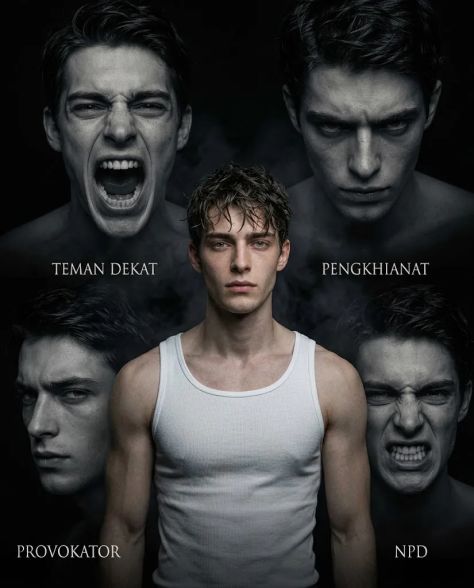
Create an ultra-photorealistic dark psychological editorial portrait collage of one same adult man. Use the separately supplied face reference strictly as the only identity reference. Preserve his exact facial identity in all five portraits, including the same facial proportions, jawline, nose, lips, eyebrows, eyes, ears, skin tone, hairstyle, and recognizable facial characteristics. All five men shown in the composition are the same person, not different people. They represent five different emotional and personality states. Facial identity and hairstyle must remain perfectly consistent across every portrait. Do not beautify, redesign, age, or change the face. Use a vertical 4:5 dark editorial poster composition. One dominant, brightly exposed portrait occupies the lower-center foreground, shown from approximately mid-chest upward. Behind him are four larger, dark monochromatic portraits of the same man arranged around the central subject: Top left: aggressive screaming side-profile or three-quarter portrait. Top right: threatening downward-looking portrait. Bottom left: suspicious and provocative side-profile portrait. Bottom right: emotionally explosive grimacing portrait. The four surrounding portraits gradually disappear into a pure black, smoky background. Their bodies should not have obvious rectangular boundaries; the faces and shoulders should naturally fade into darkness. MAIN CENTER PORTRAIT: The same adult man stands directly facing the camera, framed from approximately mid-chest to above the head. His expression is neutral, controlled, and emotionally restrained. His eyes look directly into the camera. His mouth is naturally closed with slightly relaxed lips. His head is perfectly upright and his shoulders are squared. He has short, thick black hair with a naturally messy textured crop, slightly damp-looking separated strands, and a realistic uneven hairline. He is completely clean-shaven with no moustache, beard, or goatee. He wears a simple fitted plain white ribbed or cotton sleeveless tank top with a rounded neckline. The fabric has a slightly worn natural cotton texture and subtle folds around the chest and shoulders. No graphics, writing, logos, necklace, or accessories. The white tank top provides the strongest tonal contrast against the black background. The skin must show realistic pores, subtle freckles and texture, tiny blemishes, uneven pigmentation, faint under-eye texture, and natural facial asymmetry. TOP LEFT — "TEMAN DEKAT": Place a large dark portrait of exactly the same man behind the central subject in the upper-left quadrant. Show him in a three-quarter side profile facing toward the right side of the frame. His head is thrust slightly forward and his mouth is opened very wide in an intense scream. Teeth and the inside of the mouth are realistically visible. His eyes are partially squeezed shut and his eyebrows are strongly contracted. His neck muscles and tendons are naturally tense. Include realistic forehead wrinkles and compressed facial muscles. Keep the hair identical to the central portrait. He wears a simple black crew-neck shirt that disappears almost completely into the black background. Use extremely dark low-key exposure with a narrow rim light outlining the hair, forehead, cheek, ear, and neck. Place clean white uppercase text near the upper-left area: "TEMAN DEKAT" Use simple medium-weight sans-serif typography with no decorative styling. TOP RIGHT — "PENGKHIANAT": Place a large dark portrait of the same man in the upper-right quadrant. His head is lowered forward with his chin slightly tucked. His face points downward while his eyes look upward directly toward the camera from underneath his eyebrows. His brows are strongly furrowed, creating a cold, intense, distrustful expression. His lips are firmly closed. His forehead is slightly shadowed by his hair. His hair appears slightly damp and messy, with the exact same cut and density as the other portraits. His black shirt disappears into the background. Use extremely dark and dramatic lighting. Subtle top-side rim illumination should catch individual wet-looking hair strands, the forehead, nose bridge, cheekbones, and ear while the eye sockets remain deep and shadowy. Place clean white uppercase text toward the upper-right: "PENGKHIANAT" BOTTOM LEFT — "PROVOKATOR": Place a dark three-quarter or side-profile portrait of the same man behind the main subject on the left side of the frame. His face is turned toward the right as though he is staring suspiciously at the central version of himself. His head is slightly lowered. His eyes are narrowed intensely sideways. His eyebrows are pulled inward. His jaw is tense and his lips are compressed. The expression should communicate provocation and hostility without becoming cartoonish. His black shirt merges naturally into the background. Use only a thin, controlled side light to reveal the forehead, eye, cheekbone, nose, lips, jaw, and portions of the textured hair. Place clean white uppercase text around the left-middle area: "PROVOKATOR" BOTTOM RIGHT — "NPD": Place a dark portrait of the same man behind the central figure on the right side of the frame. Show him in a three-quarter side profile facing toward the left side of the frame. His head is tilted slightly backward. His eyes are tightly squeezed shut. His teeth are clenched and clearly visible in an intense emotional grimace, with realistic tension in the cheeks, jaw, and neck muscles. Do not exaggerate the facial anatomy. Keep his hair identical to the other portraits. His black shirt and shoulders disappear into darkness. Use subtle edge lighting to outline the hair, nose, lips, jaw, and neck. Place small white uppercase text toward the right-middle area: "NPD" BACKGROUND: Use a pure, deep-black studio environment. Add very subtle dark charcoal-grey smoke or fog drifting behind and between the portraits, concentrated around the lower-middle area and around the silhouettes. The smoke should be barely visible and naturally irregular, not fantasy-like. No visible wall, floor, scenery, or props. The four background portraits should appear to emerge naturally from the blackness. LIGHTING: Use professional dark studio low-key portrait photography. For the main subject, use a soft frontal key light positioned slightly above eye level, naturally illuminating the central face, neck, shoulders, and white tank top. Add subtle side or rim illumination to separate the shoulders and hair from the background. The background faces should be approximately 1.5–2.5 stops darker than the main portrait. Use narrow, controlled rim lights to reveal only selected facial contours and textured hair. Maintain deep blacks without completely destroying skin detail. No artificial glow and no colored neon lighting. COLOR GRADE: Use a dark cinematic editorial grade. The background should be near-black charcoal with deep shadows while retaining subtle texture. Use very low saturation in the four surrounding portraits. The central portrait should retain restrained natural warm-neutral skin color. The white tank top should be slightly muted rather than appearing as pure digital white. Use moderate-to-high contrast, subtle cool charcoal tones in the shadows, natural warm skin undertones, soft highlight roll-off, very subtle matte blacks, fine analog-style film grain, slight atmospheric haze, and an extremely subtle vignette around the outer edges. The overall appearance should resemble a professionally photographed psychological-thriller poster while remaining visibly like a real studio photograph rather than digital artwork. CAMERA: Use professional full-frame portrait photography. For the main portrait, use a 50–70mm equivalent lens, approximately f/4, ISO 200–400, and 1/160 second. Position the camera directly around eye or chest level. The background portraits can have the appearance of 70–85mm close portrait photography. Maintain realistic facial perspective without wide-angle distortion. Use high-resolution detail without digitally oversharpening. CRITICAL PHOTOREALISM: Show real human pores, natural skin microtexture, tiny facial imperfections, fine eyebrow hairs, individual eyelashes, realistic ear anatomy, individual wet or messy hair strands, natural neck tendons during emotional expressions, correct teeth anatomy, natural wrinkles caused by expressions, and realistic cotton fibers and folds on the white tank top. All five faces must retain exactly the same identity. Expressions must change the facial muscles naturally without changing the underlying facial structure. Negative prompt: no AI-looking face, no waxy skin, no porcelain skin, no excessive beauty filter, no face smoothing, no different faces, no inconsistent hairstyle, no beard, no moustache, no goatee, no deformed teeth, no duplicate facial features, no asymmetrical broken eyes, no extra ears, no warped neck, no exaggerated muscles, no CGI, no 3D render, no anime, no illustration, no painting, no artificial HDR, no excessive sharpness, no fake bokeh, no colored fantasy aura, no random objects, no additional people, no logos, no watermark. Final result: Five genuine-looking studio portraits of the same real adult man professionally composited into one dark psychological editorial poster, with realistic photographic lighting, natural skin, convincing emotional facial muscle movement, subtle smoke, and a dark cinematic photographic filter.

0
Prompt

Photorealistic Portrait Studio Dramatic — Stable Diffusion

This photorealistic portrait prompt generates create an ultra-photorealistic dark psychological editorial portrait collage of one same using Stable Diffusion. Ideal for commercial projects, social media content, and creative workflows. Compatible with Midjourney v6, DALL-E 3, Flux, and Stable Diffusion.

Create an ultra-photorealistic dark psychological editorial portrait collage of one same adult man. Use the separately supplied face reference strictly as the only identity reference. Preserve his exact facial identity in all five portraits, including the same facial proportions, jawline, nose, lips, eyebrows, eyes, ears, skin tone, hairstyle, and recognizable facial characteristics.

All five men shown in the composition are the same person, not different people. They represent five different emotional and personality states. Facial identity and hairstyle must remain perfectly consistent across every portrait. Do not beautify, redesign, age, or change the face.

Use a vertical 4:5 dark editorial poster composition.

One dominant, brightly exposed portrait occupies the lower-center foreground, shown from approximately mid-chest upward.

Behind him are four larger, dark monochromatic portraits of the same man arranged around the central subject:

Top left: aggressive screaming side-profile or three-quarter portrait.

Top right: threatening downward-looking portrait.

Bottom left: suspicious and provocative side-profile portrait.

Bottom right: emotionally explosive grimacing portrait.

The four surrounding portraits gradually disappear into a pure black, smoky background. Their bodies should not have obvious rectangular boundaries; the faces and shoulders should naturally fade into darkness.

MAIN CENTER PORTRAIT:

The same adult man stands directly facing the camera, framed from approximately mid-chest to above the head.

His expression is neutral, controlled, and emotionally restrained. His eyes look directly into the camera. His mouth is naturally closed with slightly relaxed lips. His head is perfectly upright and his shoulders are squared.

He has short, thick black hair with a naturally messy textured crop, slightly damp-looking separated strands, and a realistic uneven hairline.

He is completely clean-shaven with no moustache, beard, or goatee.

He wears a simple fitted plain white ribbed or cotton sleeveless tank top with a rounded neckline. The fabric has a slightly worn natural cotton texture and subtle folds around the chest and shoulders. No graphics, writing, logos, necklace, or accessories.

The white tank top provides the strongest tonal contrast against the black background.

The skin must show realistic pores, subtle freckles and texture, tiny blemishes, uneven pigmentation, faint under-eye texture, and natural facial asymmetry.

TOP LEFT — "TEMAN DEKAT":

Place a large dark portrait of exactly the same man behind the central subject in the upper-left quadrant.

Show him in a three-quarter side profile facing toward the right side of the frame.

His head is thrust slightly forward and his mouth is opened very wide in an intense scream. Teeth and the inside of the mouth are realistically visible. His eyes are partially squeezed shut and his eyebrows are strongly contracted.

His neck muscles and tendons are naturally tense. Include realistic forehead wrinkles and compressed facial muscles.

Keep the hair identical to the central portrait.

He wears a simple black crew-neck shirt that disappears almost completely into the black background.

Use extremely dark low-key exposure with a narrow rim light outlining the hair, forehead, cheek, ear, and neck.

Place clean white uppercase text near the upper-left area:

"TEMAN DEKAT"

Use simple medium-weight sans-serif typography with no decorative styling.

TOP RIGHT — "PENGKHIANAT":

Place a large dark portrait of the same man in the upper-right quadrant.

His head is lowered forward with his chin slightly tucked. His face points downward while his eyes look upward directly toward the camera from underneath his eyebrows.

His brows are strongly furrowed, creating a cold, intense, distrustful expression. His lips are firmly closed. His forehead is slightly shadowed by his hair.

His hair appears slightly damp and messy, with the exact same cut and density as the other portraits.

His black shirt disappears into the background.

Use extremely dark and dramatic lighting. Subtle top-side rim illumination should catch individual wet-looking hair strands, the forehead, nose bridge, cheekbones, and ear while the eye sockets remain deep and shadowy.

Place clean white uppercase text toward the upper-right:

"PENGKHIANAT"

BOTTOM LEFT — "PROVOKATOR":

Place a dark three-quarter or side-profile portrait of the same man behind the main subject on the left side of the frame.

His face is turned toward the right as though he is staring suspiciously at the central version of himself.

His head is slightly lowered. His eyes are narrowed intensely sideways. His eyebrows are pulled inward. His jaw is tense and his lips are compressed.

The expression should communicate provocation and hostility without becoming cartoonish.

His black shirt merges naturally into the background.

Use only a thin, controlled side light to reveal the forehead, eye, cheekbone, nose, lips, jaw, and portions of the textured hair.

Place clean white uppercase text around the left-middle area:

"PROVOKATOR"

BOTTOM RIGHT — "NPD":

Place a dark portrait of the same man behind the central figure on the right side of the frame.

Show him in a three-quarter side profile facing toward the left side of the frame.

His head is tilted slightly backward. His eyes are tightly squeezed shut. His teeth are clenched and clearly visible in an intense emotional grimace, with realistic tension in the cheeks, jaw, and neck muscles.

Do not exaggerate the facial anatomy.

Keep his hair identical to the other portraits.

His black shirt and shoulders disappear into darkness.

Use subtle edge lighting to outline the hair, nose, lips, jaw, and neck.

Place small white uppercase text toward the right-middle area:

"NPD"

BACKGROUND:

Use a pure, deep-black studio environment.

Add very subtle dark charcoal-grey smoke or fog drifting behind and between the portraits, concentrated around the lower-middle area and around the silhouettes.

The smoke should be barely visible and naturally irregular, not fantasy-like.

No visible wall, floor, scenery, or props.

The four background portraits should appear to emerge naturally from the blackness.

LIGHTING:

Use professional dark studio low-key portrait photography.

For the main subject, use a soft frontal key light positioned slightly above eye level, naturally illuminating the central face, neck, shoulders, and white tank top.

Add subtle side or rim illumination to separate the shoulders and hair from the background.

The background faces should be approximately 1.5–2.5 stops darker than the main portrait.

Use narrow, controlled rim lights to reveal only selected facial contours and textured hair.

Maintain deep blacks without completely destroying skin detail.

No artificial glow and no colored neon lighting.

COLOR GRADE:

Use a dark cinematic editorial grade.

The background should be near-black charcoal with deep shadows while retaining subtle texture.

Use very low saturation in the four surrounding portraits.

The central portrait should retain restrained natural warm-neutral skin color.

The white tank top should be slightly muted rather than appearing as pure digital white.

Use moderate-to-high contrast, subtle cool charcoal tones in the shadows, natural warm skin undertones, soft highlight roll-off, very subtle matte blacks, fine analog-style film grain, slight atmospheric haze, and an extremely subtle vignette around the outer edges.

The overall appearance should resemble a professionally photographed psychological-thriller poster while remaining visibly like a real studio photograph rather than digital artwork.

CAMERA:

Use professional full-frame portrait photography.

For the main portrait, use a 50–70mm equivalent lens, approximately f/4, ISO 200–400, and 1/160 second.

Position the camera directly around eye or chest level.

The background portraits can have the appearance of 70–85mm close portrait photography.

Maintain realistic facial perspective without wide-angle distortion.

Use high-resolution detail without digitally oversharpening.

CRITICAL PHOTOREALISM:

Show real human pores, natural skin microtexture, tiny facial imperfections, fine eyebrow hairs, individual eyelashes, realistic ear anatomy, individual wet or messy hair strands, natural neck tendons during emotional expressions, correct teeth anatomy, natural wrinkles caused by expressions, and realistic cotton fibers and folds on the white tank top.

All five faces must retain exactly the same identity.

Expressions must change the facial muscles naturally without changing the underlying facial structure.

Negative prompt: no AI-looking face, no waxy skin, no porcelain skin, no excessive beauty filter, no face smoothing, no different faces, no inconsistent hairstyle, no beard, no moustache, no goatee, no deformed teeth, no duplicate facial features, no asymmetrical broken eyes, no extra ears, no warped neck, no exaggerated muscles, no CGI, no 3D render, no anime, no illustration, no painting, no artificial HDR, no excessive sharpness, no fake bokeh, no colored fantasy aura, no random objects, no additional people, no logos, no watermark.

Final result: Five genuine-looking studio portraits of the same real adult man professionally composited into one dark psychological editorial poster, with realistic photographic lighting, natural skin, convincing emotional facial muscle movement, subtle smoke, and a dark cinematic photographic filter.

·
Stable Diffusion Prompts

评价

登录后即可发表评价。

暂无评价。来写第一条吧。

Photorealistic Portrait Studio Dramatic — Stable Diffusion
P

Create an ultra-photorealistic dark psychological editorial portrait collage of one same adult man. Use the separately supplied face reference strictly as the only identity reference. Preserve his exact facial identity in all five portraits, including the same facial proportions, jawline, nose, lips, eyebrows, eyes, ears, skin tone, hairstyle, and recognizable facial characteristics. All five men shown in the composition are the same person, not different people. They represent five different emotional and personality states. Facial identity and hairstyle must remain perfectly consistent across every portrait. Do not beautify, redesign, age, or change the face. Use a vertical 4:5 dark editorial poster composition. One dominant, brightly exposed portrait occupies the lower-center foreground, shown from approximately mid-chest upward. Behind him are four larger, dark monochromatic portraits of the same man arranged around the central subject: Top left: aggressive screaming side-profile or three-quarter portrait. Top right: threatening downward-looking portrait. Bottom left: suspicious and provocative side-profile portrait. Bottom right: emotionally explosive grimacing portrait. The four surrounding portraits gradually disappear into a pure black, smoky background. Their bodies should not have obvious rectangular boundaries; the faces and shoulders should naturally fade into darkness. MAIN CENTER PORTRAIT: The same adult man stands directly facing the camera, framed from approximately mid-chest to above the head. His expression is neutral, controlled, and emotionally restrained. His eyes look directly into the camera. His mouth is naturally closed with slightly relaxed lips. His head is perfectly upright and his shoulders are squared. He has short, thick black hair with a naturally messy textured crop, slightly damp-looking separated strands, and a realistic uneven hairline. He is completely clean-shaven with no moustache, beard, or goatee. He wears a simple fitted plain white ribbed or cotton sleeveless tank top with a rounded neckline. The fabric has a slightly worn natural cotton texture and subtle folds around the chest and shoulders. No graphics, writing, logos, necklace, or accessories. The white tank top provides the strongest tonal contrast against the black background. The skin must show realistic pores, subtle freckles and texture, tiny blemishes, uneven pigmentation, faint under-eye texture, and natural facial asymmetry. TOP LEFT — "TEMAN DEKAT": Place a large dark portrait of exactly the same man behind the central subject in the upper-left quadrant. Show him in a three-quarter side profile facing toward the right side of the frame. His head is thrust slightly forward and his mouth is opened very wide in an intense scream. Teeth and the inside of the mouth are realistically visible. His eyes are partially squeezed shut and his eyebrows are strongly contracted. His neck muscles and tendons are naturally tense. Include realistic forehead wrinkles and compressed facial muscles. Keep the hair identical to the central portrait. He wears a simple black crew-neck shirt that disappears almost completely into the black background. Use extremely dark low-key exposure with a narrow rim light outlining the hair, forehead, cheek, ear, and neck. Place clean white uppercase text near the upper-left area: "TEMAN DEKAT" Use simple medium-weight sans-serif typography with no decorative styling. TOP RIGHT — "PENGKHIANAT": Place a large dark portrait of the same man in the upper-right quadrant. His head is lowered forward with his chin slightly tucked. His face points downward while his eyes look upward directly toward the camera from underneath his eyebrows. His brows are strongly furrowed, creating a cold, intense, distrustful expression. His lips are firmly closed. His forehead is slightly shadowed by his hair. His hair appears slightly damp and messy, with the exact same cut and density as the other portraits. His black shirt disappears into the background. Use extremely dark and dramatic lighting. Subtle top-side rim illumination should catch individual wet-looking hair strands, the forehead, nose bridge, cheekbones, and ear while the eye sockets remain deep and shadowy. Place clean white uppercase text toward the upper-right: "PENGKHIANAT" BOTTOM LEFT — "PROVOKATOR": Place a dark three-quarter or side-profile portrait of the same man behind the main subject on the left side of the frame. His face is turned toward the right as though he is staring suspiciously at the central version of himself. His head is slightly lowered. His eyes are narrowed intensely sideways. His eyebrows are pulled inward. His jaw is tense and his lips are compressed. The expression should communicate provocation and hostility without becoming cartoonish. His black shirt merges naturally into the background. Use only a thin, controlled side light to reveal the forehead, eye, cheekbone, nose, lips, jaw, and portions of the textured hair. Place clean white uppercase text around the left-middle area: "PROVOKATOR" BOTTOM RIGHT — "NPD": Place a dark portrait of the same man behind the central figure on the right side of the frame. Show him in a three-quarter side profile facing toward the left side of the frame. His head is tilted slightly backward. His eyes are tightly squeezed shut. His teeth are clenched and clearly visible in an intense emotional grimace, with realistic tension in the cheeks, jaw, and neck muscles. Do not exaggerate the facial anatomy. Keep his hair identical to the other portraits. His black shirt and shoulders disappear into darkness. Use subtle edge lighting to outline the hair, nose, lips, jaw, and neck. Place small white uppercase text toward the right-middle area: "NPD" BACKGROUND: Use a pure, deep-black studio environment. Add very subtle dark charcoal-grey smoke or fog drifting behind and between the portraits, concentrated around the lower-middle area and around the silhouettes. The smoke should be barely visible and naturally irregular, not fantasy-like. No visible wall, floor, scenery, or props. The four background portraits should appear to emerge naturally from the blackness. LIGHTING: Use professional dark studio low-key portrait photography. For the main subject, use a soft frontal key light positioned slightly above eye level, naturally illuminating the central face, neck, shoulders, and white tank top. Add subtle side or rim illumination to separate the shoulders and hair from the background. The background faces should be approximately 1.5–2.5 stops darker than the main portrait. Use narrow, controlled rim lights to reveal only selected facial contours and textured hair. Maintain deep blacks without completely destroying skin detail. No artificial glow and no colored neon lighting. COLOR GRADE: Use a dark cinematic editorial grade. The background should be near-black charcoal with deep shadows while retaining subtle texture. Use very low saturation in the four surrounding portraits. The central portrait should retain restrained natural warm-neutral skin color. The white tank top should be slightly muted rather than appearing as pure digital white. Use moderate-to-high contrast, subtle cool charcoal tones in the shadows, natural warm skin undertones, soft highlight roll-off, very subtle matte blacks, fine analog-style film grain, slight atmospheric haze, and an extremely subtle vignette around the outer edges. The overall appearance should resemble a professionally photographed psychological-thriller poster while remaining visibly like a real studio photograph rather than digital artwork. CAMERA: Use professional full-frame portrait photography. For the main portrait, use a 50–70mm equivalent lens, approximately f/4, ISO 200–400, and 1/160 second. Position the camera directly around eye or chest level. The background portraits can have the appearance of 70–85mm close portrait photography. Maintain realistic facial perspective without wide-angle distortion. Use high-resolution detail without digitally oversharpening. CRITICAL PHOTOREALISM: Show real human pores, natural skin microtexture, tiny facial imperfections, fine eyebrow hairs, individual eyelashes, realistic ear anatomy, individual wet or messy hair strands, natural neck tendons during emotional expressions, correct teeth anatomy, natural wrinkles caused by expressions, and realistic cotton fibers and folds on the white tank top. All five faces must retain exactly the same identity. Expressions must change the facial muscles naturally without changing the underlying facial structure. Negative prompt: no AI-looking face, no waxy skin, no porcelain skin, no excessive beauty filter, no face smoothing, no different faces, no inconsistent hairstyle, no beard, no moustache, no goatee, no deformed teeth, no duplicate facial features, no asymmetrical broken eyes, no extra ears, no warped neck, no exaggerated muscles, no CGI, no 3D render, no anime, no illustration, no painting, no artificial HDR, no excessive sharpness, no fake bokeh, no colored fantasy aura, no random objects, no additional people, no logos, no watermark. Final result: Five genuine-looking studio portraits of the same real adult man professionally composited into one dark psychological editorial poster, with realistic photographic lighting, natural skin, convincing emotional facial muscle movement, subtle smoke, and a dark cinematic photographic filter.

0
Prompt

Photorealistic Portrait Studio Dramatic — Stable Diffusion

This photorealistic portrait prompt generates create an ultra-photorealistic dark psychological editorial portrait collage of one same using Stable Diffusion. Ideal for commercial projects, social media content, and creative workflows. Compatible with Midjourney v6, DALL-E 3, Flux, and Stable Diffusion.

Create an ultra-photorealistic dark psychological editorial portrait collage of one same adult man. Use the separately supplied face reference strictly as the only identity reference. Preserve his exact facial identity in all five portraits, including the same facial proportions, jawline, nose, lips, eyebrows, eyes, ears, skin tone, hairstyle, and recognizable facial characteristics.

All five men shown in the composition are the same person, not different people. They represent five different emotional and personality states. Facial identity and hairstyle must remain perfectly consistent across every portrait. Do not beautify, redesign, age, or change the face.

Use a vertical 4:5 dark editorial poster composition.

One dominant, brightly exposed portrait occupies the lower-center foreground, shown from approximately mid-chest upward.

Behind him are four larger, dark monochromatic portraits of the same man arranged around the central subject:

Top left: aggressive screaming side-profile or three-quarter portrait.

Top right: threatening downward-looking portrait.

Bottom left: suspicious and provocative side-profile portrait.

Bottom right: emotionally explosive grimacing portrait.

The four surrounding portraits gradually disappear into a pure black, smoky background. Their bodies should not have obvious rectangular boundaries; the faces and shoulders should naturally fade into darkness.

MAIN CENTER PORTRAIT:

The same adult man stands directly facing the camera, framed from approximately mid-chest to above the head.

His expression is neutral, controlled, and emotionally restrained. His eyes look directly into the camera. His mouth is naturally closed with slightly relaxed lips. His head is perfectly upright and his shoulders are squared.

He has short, thick black hair with a naturally messy textured crop, slightly damp-looking separated strands, and a realistic uneven hairline.

He is completely clean-shaven with no moustache, beard, or goatee.

He wears a simple fitted plain white ribbed or cotton sleeveless tank top with a rounded neckline. The fabric has a slightly worn natural cotton texture and subtle folds around the chest and shoulders. No graphics, writing, logos, necklace, or accessories.

The white tank top provides the strongest tonal contrast against the black background.

The skin must show realistic pores, subtle freckles and texture, tiny blemishes, uneven pigmentation, faint under-eye texture, and natural facial asymmetry.

TOP LEFT — "TEMAN DEKAT":

Place a large dark portrait of exactly the same man behind the central subject in the upper-left quadrant.

Show him in a three-quarter side profile facing toward the right side of the frame.

His head is thrust slightly forward and his mouth is opened very wide in an intense scream. Teeth and the inside of the mouth are realistically visible. His eyes are partially squeezed shut and his eyebrows are strongly contracted.

His neck muscles and tendons are naturally tense. Include realistic forehead wrinkles and compressed facial muscles.

Keep the hair identical to the central portrait.

He wears a simple black crew-neck shirt that disappears almost completely into the black background.

Use extremely dark low-key exposure with a narrow rim light outlining the hair, forehead, cheek, ear, and neck.

Place clean white uppercase text near the upper-left area:

"TEMAN DEKAT"

Use simple medium-weight sans-serif typography with no decorative styling.

TOP RIGHT — "PENGKHIANAT":

Place a large dark portrait of the same man in the upper-right quadrant.

His head is lowered forward with his chin slightly tucked. His face points downward while his eyes look upward directly toward the camera from underneath his eyebrows.

His brows are strongly furrowed, creating a cold, intense, distrustful expression. His lips are firmly closed. His forehead is slightly shadowed by his hair.

His hair appears slightly damp and messy, with the exact same cut and density as the other portraits.

His black shirt disappears into the background.

Use extremely dark and dramatic lighting. Subtle top-side rim illumination should catch individual wet-looking hair strands, the forehead, nose bridge, cheekbones, and ear while the eye sockets remain deep and shadowy.

Place clean white uppercase text toward the upper-right:

"PENGKHIANAT"

BOTTOM LEFT — "PROVOKATOR":

Place a dark three-quarter or side-profile portrait of the same man behind the main subject on the left side of the frame.

His face is turned toward the right as though he is staring suspiciously at the central version of himself.

His head is slightly lowered. His eyes are narrowed intensely sideways. His eyebrows are pulled inward. His jaw is tense and his lips are compressed.

The expression should communicate provocation and hostility without becoming cartoonish.

His black shirt merges naturally into the background.

Use only a thin, controlled side light to reveal the forehead, eye, cheekbone, nose, lips, jaw, and portions of the textured hair.

Place clean white uppercase text around the left-middle area:

"PROVOKATOR"

BOTTOM RIGHT — "NPD":

Place a dark portrait of the same man behind the central figure on the right side of the frame.

Show him in a three-quarter side profile facing toward the left side of the frame.

His head is tilted slightly backward. His eyes are tightly squeezed shut. His teeth are clenched and clearly visible in an intense emotional grimace, with realistic tension in the cheeks, jaw, and neck muscles.

Do not exaggerate the facial anatomy.

Keep his hair identical to the other portraits.

His black shirt and shoulders disappear into darkness.

Use subtle edge lighting to outline the hair, nose, lips, jaw, and neck.

Place small white uppercase text toward the right-middle area:

"NPD"

BACKGROUND:

Use a pure, deep-black studio environment.

Add very subtle dark charcoal-grey smoke or fog drifting behind and between the portraits, concentrated around the lower-middle area and around the silhouettes.

The smoke should be barely visible and naturally irregular, not fantasy-like.

No visible wall, floor, scenery, or props.

The four background portraits should appear to emerge naturally from the blackness.

LIGHTING:

Use professional dark studio low-key portrait photography.

For the main subject, use a soft frontal key light positioned slightly above eye level, naturally illuminating the central face, neck, shoulders, and white tank top.

Add subtle side or rim illumination to separate the shoulders and hair from the background.

The background faces should be approximately 1.5–2.5 stops darker than the main portrait.

Use narrow, controlled rim lights to reveal only selected facial contours and textured hair.

Maintain deep blacks without completely destroying skin detail.

No artificial glow and no colored neon lighting.

COLOR GRADE:

Use a dark cinematic editorial grade.

The background should be near-black charcoal with deep shadows while retaining subtle texture.

Use very low saturation in the four surrounding portraits.

The central portrait should retain restrained natural warm-neutral skin color.

The white tank top should be slightly muted rather than appearing as pure digital white.

Use moderate-to-high contrast, subtle cool charcoal tones in the shadows, natural warm skin undertones, soft highlight roll-off, very subtle matte blacks, fine analog-style film grain, slight atmospheric haze, and an extremely subtle vignette around the outer edges.

The overall appearance should resemble a professionally photographed psychological-thriller poster while remaining visibly like a real studio photograph rather than digital artwork.

CAMERA:

Use professional full-frame portrait photography.

For the main portrait, use a 50–70mm equivalent lens, approximately f/4, ISO 200–400, and 1/160 second.

Position the camera directly around eye or chest level.

The background portraits can have the appearance of 70–85mm close portrait photography.

Maintain realistic facial perspective without wide-angle distortion.

Use high-resolution detail without digitally oversharpening.

CRITICAL PHOTOREALISM:

Show real human pores, natural skin microtexture, tiny facial imperfections, fine eyebrow hairs, individual eyelashes, realistic ear anatomy, individual wet or messy hair strands, natural neck tendons during emotional expressions, correct teeth anatomy, natural wrinkles caused by expressions, and realistic cotton fibers and folds on the white tank top.

All five faces must retain exactly the same identity.

Expressions must change the facial muscles naturally without changing the underlying facial structure.

Negative prompt: no AI-looking face, no waxy skin, no porcelain skin, no excessive beauty filter, no face smoothing, no different faces, no inconsistent hairstyle, no beard, no moustache, no goatee, no deformed teeth, no duplicate facial features, no asymmetrical broken eyes, no extra ears, no warped neck, no exaggerated muscles, no CGI, no 3D render, no anime, no illustration, no painting, no artificial HDR, no excessive sharpness, no fake bokeh, no colored fantasy aura, no random objects, no additional people, no logos, no watermark.

Final result: Five genuine-looking studio portraits of the same real adult man professionally composited into one dark psychological editorial poster, with realistic photographic lighting, natural skin, convincing emotional facial muscle movement, subtle smoke, and a dark cinematic photographic filter.

·
Stable Diffusion Prompts

评价

登录后即可发表评价。

暂无评价。来写第一条吧。