
PromptLabHub
Vibrant Product Studio Elegant Light Bokeh
1
1
Prompt

Vibrant Product Studio Elegant Light Bokeh

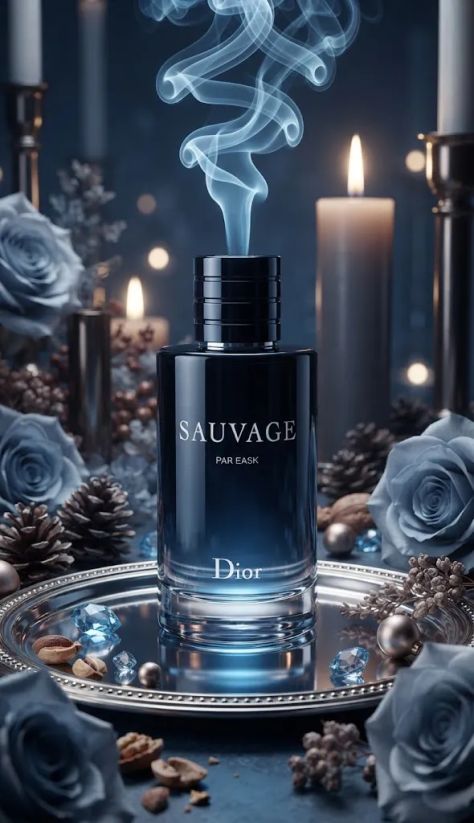
Use the uploaded image as the main visual reference. Recreate the same luxury fragrance product still life, same dark decorative studio setting, same glossy transparent fragrance bottle, same surrounding roses, pinecones, metallic ornaments, crystals, candles, serving tray, smoke effect, framing, and cool-versus-warm lighting structure. Do not invent a new product shape, new palette, new background arrangement, new props, or new camera angle. Follow the uploaded image closely and apply only the refinements below.

Generate a maximum-photorealistic high-end commercial fragrance advertising image of the same perfume bottle in a vertical 4:7 composition. Center the bottle precisely on the vertical axis in the lower-middle portion of the frame, with the entire bottle visible from its thick base through the cylindrical cap. Use a near eye-level product viewpoint with a slight downward viewing component so the circular tray reads as a shallow ellipse. Keep the camera optical axis aimed around the bottle midsection. Allow the surrounding floral and decorative elements to extend naturally beyond the left, right, and bottom frame boundaries exactly as in the reference.

Preserve the exact fragrance bottle design and proportions: a compact rectangular-cylindrical body approximately 1.7:1 in height-to-width ratio excluding the cap, straight vertical sidewalls, softly rounded vertical edges, subtle rounded shoulders, a broad stable footprint, and an optically thick glass base. Render the body in polished transparent glass with the upper 65–70% at H 220–228°, S 65–82%, B 6–16%, appearing almost opaque because of low transmission and deep internal absorption. Transition the lower 25–30% into luminous transparent glass at H 215–224°, S 90–100%, B 55–90%, with concentrated refracted bands shifting toward H 197–205°, S 90–100%, B 90–100%. Build several horizontal refraction layers through the thick base while keeping the exterior glass completely smooth, glossy, and free of embossing or grain.

Preserve the short cylindrical cap and neck assembly. Render it in extremely low-brightness lacquer at H 220–230°, S 20–35%, B 3–9%, with a polished-to-semi-gloss finish, flat circular top, and several shallow horizontal rings around its lower half. Add narrow cool specular streaks at H 205–215°, S 15–35%, B 80–100% along the cap curvature and crisp horizontal reflections across the ring details. Do not introduce knurling, engraving, fabric texture, or additional mechanical details.

Preserve the front typography exactly as part of the product design. Place “SAUVAGE” centered on the upper-middle front surface in uppercase, widely tracked, high-contrast serif lettering with a neutral luminous tone around H 40–55°, S 2–6%, B 92–100%. Place a much smaller uppercase serif line reading “PAR EASK” immediately beneath it using the same low-saturation luminous treatment. Place “Dior” centered near the lower front face in smaller serif lettering. Keep all three text elements clean, frontal, level, proportionally identical to the reference, and integrated into the glass surface without adding any symbol mark, border, label panel, or additional typography.

Do not show a separate visible liquid boundary inside the bottle. Keep the interior optically continuous with the dark-to-luminous glass treatment. No bubbles, suspended particles, pouring liquid, droplets, wet streaks, or condensation.

Generate a vivid volumetric smoke plume emerging directly from the exact top-center of the cap. Begin with a narrow concentrated column and let it expand upward into layered ribbon-like S-curves, loops, folded sheets, and translucent curls. Keep the highest plume extending beyond the top frame edge. Render the brightest smoke edges at H 198–208°, S 88–98%, B 82–100%, with translucent inner folds shifting toward H 216–225°, S 65–88%, B 30–65%. Maintain physically plausible volumetric transparency, varied density, overlapping folds, softly feathered edges, and brighter cyan-biased scattering where the smoke intersects the key light. Do not add fire, sparks, fog elsewhere in the scene, or detached smoke sources.

Keep the perfume bottle standing on the same ornate circular serving tray. Render the tray as highly reflective neutral metal with saturation below 6% and brightness ranging from B 35–95% according to reflection angle. Preserve the polished mirror-like center and decorative beaded/ridged perimeter. Reflect the bottle’s H 215–224° blue transmission strongly in the central metal surface while adding thin localized warm reflections at H 30–42°, S 70–95%, B 75–100% from the candles. Maintain sharp metallic highlights along raised edges and softer environment reflections across flatter zones.

Arrange the foreground and midground props exactly around the bottle: multiple dark pinecones, scattered tan nut and seed fragments, faceted transparent blue crystal pieces, small satin metallic spheres, dried berry clusters, dried botanical sprigs, and dense large-petaled roses. Render the roses at H 217–225°, S 88–100%, B 35–78% on illuminated petals, with recessed folds decreasing to B 7–18% while preserving strong saturation rather than clipping toward neutral highlights. Give the petals a soft velvety micro-surface with broad diffused highlights. Crop several large roses through the left, right, and bottom edges as in the reference.

Render the pinecones with dry matte-to-satin scales at H 22–32°, S 40–60%, B 18–35%, with narrow warmer scale-edge accents around H 25–35°, S 50–70%, B 38–58%. Render scattered nuts and seed fragments at H 28–38°, S 30–55%, B 45–70%. Render the small faceted crystals as transparent-to-translucent material at H 215–225°, S 90–100%, B 50–95%, with hard specular facets and internal blue refraction. Render the decorative spheres as satin metal carrying reflected tones around H 35–42°, S 65–90%, B 60–95%. Include muted dried botanical clusters around H 25–40°, S 15–40%, B 25–55% plus desaturated cool botanical details around H 210–225°, S 15–30%, B 35–55%.

The background should follow the uploaded image with three distinct depth layers. Layer 1 is the critically sharp perfume bottle, immediate tray surface, and closest foreground props. Layer 2 contains moderately softened roses, botanical material, pinecones, candles, and metallic candle supports positioned around and behind the tray. Layer 3 contains heavily defocused tall vertical architectural or candlestick-like forms in deep H 218–230°, S 45–75%, B 4–15%, with no recognizable location-specific architecture and no readable background text. Keep the background darker and less saturated than the hero bottle so the luminous lower glass and typography remain visually isolated.

Place one tall pillar candle behind and to the right of the bottle, with a low-saturation wax body around H 40–50°, S 4–10%, B 80–95%. Give it a narrow upright flame with a bright core around H 42–48°, S 40–70%, B 100% and an outer amber envelope around H 30–38°, S 90–100%, B 90–100%. Place a second smaller practical flame behind-left, heavily defocused and partly obscured by the floral arrangement. Include dark polished vertical candle-support forms on both sides of the bottle with narrow warm reflections. Add approximately six small circular or oval defocused practical-light points throughout the rear depth layer, using very soft edges and avoiding polygonal or hard geometric bokeh.

Use a soft cool key light from approximately the 10:30 o’clock front-left position, angled downward toward the bottle at approximately 25–35 degrees, with a source temperature of 5600 K. Shape the glass with long narrow vertical specular highlights along the sidewalls, shoulders, and cap, leaving the central upper body mostly dark. Set the fill to approximately 30% of key intensity so shadow detail remains visible without lifting the H 218–230° deep-blue shadow floor into neutral gray.

Add a strong saturated transmitted accent from below and slightly in front of the bottle at H 215–222°, S 95–100%, producing the luminous lower-glass gradient, bright horizontal refraction bands through the thick base, and a concentrated blue reflection on the tray. Add a narrow cool rim from the rear-side direction at approximately H 205–215°, S 25–55%, B 80–100% to trace the bottle edges and shoulder without creating a broad halo.

Use the two candle sources as localized rear practical illumination at approximately 1900–2100 K. Let their warm reflections touch the tray perimeter, nearby pinecone edges, metallic spheres, and polished vertical background supports without contaminating the main cool glass color. Preserve strong cool/warm separation: shadows dominated by H 218–230° deep blue, cool highlights ranging through H 198–215°, and localized warm highlights at H 30–42°.

Use an approximately 85 mm full-frame-equivalent commercial product lens with minimal perspective distortion. Set aperture near f/3.2. Keep the entire bottle, logo area, cap, and immediate tray beneath it critically sharp; allow nearby pinecones and tray decorations to retain moderate detail; progressively defocus roses, candles, and background structures. Maintain shallow selective depth of field with smooth circular bokeh. Use no visible lens distortion, no fisheye effect, no significant chromatic aberration, and no lens flare.

Apply a polished luxury-commercial color grade dominated by H 215–225° saturated blue with selective H 198–210° cyan luminous accents and H 30–42° candle contrast. Keep the overall visual white-balance impression around 4800–5200 K while preserving the independent approximately 2000 K practical flames. Use grain level 1/10 and post-processing intensity 9/10: controlled highlight roll-off, deep shaped contrast, precise local sharpening on the bottle, restrained bloom around flames, subtle glow only in the luminous glass and smoke, clean reflective surfaces, and physically convincing glass and metal behavior.

Render at maximum photorealistic commercial advertising quality with physically inspired transparent glass, metal reflections, volumetric smoke, realistic flower materials, and intentionally intensified blue luminosity. Follow the uploaded image as the primary reference. Preserve the exact bottle proportions, cap geometry, typography placement, tray position, smoke origin and trajectory, prop distribution, vertical framing, camera height, depth structure, lighting direction, color temperature separation, and environment.

Do not alter the perfume bottle shape. Do not change the dark transparent glass-to-luminous blue base transition. Do not substitute the polished glass, lacquered cap, reflective tray, velvety petals, dry pinecones, faceted crystals, or satin metallic spheres with different materials. Do not change the specified color values. Do not move the bottle away from the central vertical axis. Do not replace the circular tray. Do not change the candle positions or smoke source.

No extra people. No extra products. No duplicate perfume bottles. No extra flowers or decorative objects beyond the established composition. No additional text beyond the specified bottle branding. No watermark. No floating logo. No frame or border. No rain. No environmental fog outside the blue smoke. No motion blur. No lens distortion. No malformed bottle geometry. No melted glass. No plastic-looking reflections. No low-resolution surfaces. Ultra-high resolution, critically sharp hero product, accurate glass thickness, accurate metallic reflections, realistic velvet-petal texture, realistic dry botanical texture, physically convincing volumetric smoke, and premium photorealistic fragrance-advertising finish only.

·
Product Ads

评价

登录后即可发表评价。

暂无评价。来写第一条吧。

在任何设备上使用 PromptLabHub。

安装应用以便更快打开,或下载 Chrome 扩展并在浏览器中加载。

浏览 Prompt

  • 全部 Prompt
  • 摄影 Prompt
  • 视频 Prompt
  • 美食 Prompt

创作

  • 提交 Prompt

社区

  • 论坛
  • 创作者
  • 排行榜
  • 每周挑战

支持

  • 常见问题
  • 联系我们
  • 隐私政策
  • 服务条款

关注我们

发现并复制精选 AI Prompt,适用于 Midjourney、DALL-E 3、Sora、Runway 等。每周更新。

隐私政策服务条款Cookie 政策

© 2026 PromptLabHub. All rights reserved.

© 2026 PromptLabHub. All rights reserved.

·
隐私政策·服务条款·Cookie 政策
Home
PromptLabHub
Vibrant Product Studio Elegant Light Bokeh
1
1
Prompt

Vibrant Product Studio Elegant Light Bokeh

Use the uploaded image as the main visual reference. Recreate the same luxury fragrance product still life, same dark decorative studio setting, same glossy transparent fragrance bottle, same surrounding roses, pinecones, metallic ornaments, crystals, candles, serving tray, smoke effect, framing, and cool-versus-warm lighting structure. Do not invent a new product shape, new palette, new background arrangement, new props, or new camera angle. Follow the uploaded image closely and apply only the refinements below.

Generate a maximum-photorealistic high-end commercial fragrance advertising image of the same perfume bottle in a vertical 4:7 composition. Center the bottle precisely on the vertical axis in the lower-middle portion of the frame, with the entire bottle visible from its thick base through the cylindrical cap. Use a near eye-level product viewpoint with a slight downward viewing component so the circular tray reads as a shallow ellipse. Keep the camera optical axis aimed around the bottle midsection. Allow the surrounding floral and decorative elements to extend naturally beyond the left, right, and bottom frame boundaries exactly as in the reference.

Preserve the exact fragrance bottle design and proportions: a compact rectangular-cylindrical body approximately 1.7:1 in height-to-width ratio excluding the cap, straight vertical sidewalls, softly rounded vertical edges, subtle rounded shoulders, a broad stable footprint, and an optically thick glass base. Render the body in polished transparent glass with the upper 65–70% at H 220–228°, S 65–82%, B 6–16%, appearing almost opaque because of low transmission and deep internal absorption. Transition the lower 25–30% into luminous transparent glass at H 215–224°, S 90–100%, B 55–90%, with concentrated refracted bands shifting toward H 197–205°, S 90–100%, B 90–100%. Build several horizontal refraction layers through the thick base while keeping the exterior glass completely smooth, glossy, and free of embossing or grain.

Preserve the short cylindrical cap and neck assembly. Render it in extremely low-brightness lacquer at H 220–230°, S 20–35%, B 3–9%, with a polished-to-semi-gloss finish, flat circular top, and several shallow horizontal rings around its lower half. Add narrow cool specular streaks at H 205–215°, S 15–35%, B 80–100% along the cap curvature and crisp horizontal reflections across the ring details. Do not introduce knurling, engraving, fabric texture, or additional mechanical details.

Preserve the front typography exactly as part of the product design. Place “SAUVAGE” centered on the upper-middle front surface in uppercase, widely tracked, high-contrast serif lettering with a neutral luminous tone around H 40–55°, S 2–6%, B 92–100%. Place a much smaller uppercase serif line reading “PAR EASK” immediately beneath it using the same low-saturation luminous treatment. Place “Dior” centered near the lower front face in smaller serif lettering. Keep all three text elements clean, frontal, level, proportionally identical to the reference, and integrated into the glass surface without adding any symbol mark, border, label panel, or additional typography.

Do not show a separate visible liquid boundary inside the bottle. Keep the interior optically continuous with the dark-to-luminous glass treatment. No bubbles, suspended particles, pouring liquid, droplets, wet streaks, or condensation.

Generate a vivid volumetric smoke plume emerging directly from the exact top-center of the cap. Begin with a narrow concentrated column and let it expand upward into layered ribbon-like S-curves, loops, folded sheets, and translucent curls. Keep the highest plume extending beyond the top frame edge. Render the brightest smoke edges at H 198–208°, S 88–98%, B 82–100%, with translucent inner folds shifting toward H 216–225°, S 65–88%, B 30–65%. Maintain physically plausible volumetric transparency, varied density, overlapping folds, softly feathered edges, and brighter cyan-biased scattering where the smoke intersects the key light. Do not add fire, sparks, fog elsewhere in the scene, or detached smoke sources.

Keep the perfume bottle standing on the same ornate circular serving tray. Render the tray as highly reflective neutral metal with saturation below 6% and brightness ranging from B 35–95% according to reflection angle. Preserve the polished mirror-like center and decorative beaded/ridged perimeter. Reflect the bottle’s H 215–224° blue transmission strongly in the central metal surface while adding thin localized warm reflections at H 30–42°, S 70–95%, B 75–100% from the candles. Maintain sharp metallic highlights along raised edges and softer environment reflections across flatter zones.

Arrange the foreground and midground props exactly around the bottle: multiple dark pinecones, scattered tan nut and seed fragments, faceted transparent blue crystal pieces, small satin metallic spheres, dried berry clusters, dried botanical sprigs, and dense large-petaled roses. Render the roses at H 217–225°, S 88–100%, B 35–78% on illuminated petals, with recessed folds decreasing to B 7–18% while preserving strong saturation rather than clipping toward neutral highlights. Give the petals a soft velvety micro-surface with broad diffused highlights. Crop several large roses through the left, right, and bottom edges as in the reference.

Render the pinecones with dry matte-to-satin scales at H 22–32°, S 40–60%, B 18–35%, with narrow warmer scale-edge accents around H 25–35°, S 50–70%, B 38–58%. Render scattered nuts and seed fragments at H 28–38°, S 30–55%, B 45–70%. Render the small faceted crystals as transparent-to-translucent material at H 215–225°, S 90–100%, B 50–95%, with hard specular facets and internal blue refraction. Render the decorative spheres as satin metal carrying reflected tones around H 35–42°, S 65–90%, B 60–95%. Include muted dried botanical clusters around H 25–40°, S 15–40%, B 25–55% plus desaturated cool botanical details around H 210–225°, S 15–30%, B 35–55%.

The background should follow the uploaded image with three distinct depth layers. Layer 1 is the critically sharp perfume bottle, immediate tray surface, and closest foreground props. Layer 2 contains moderately softened roses, botanical material, pinecones, candles, and metallic candle supports positioned around and behind the tray. Layer 3 contains heavily defocused tall vertical architectural or candlestick-like forms in deep H 218–230°, S 45–75%, B 4–15%, with no recognizable location-specific architecture and no readable background text. Keep the background darker and less saturated than the hero bottle so the luminous lower glass and typography remain visually isolated.

Place one tall pillar candle behind and to the right of the bottle, with a low-saturation wax body around H 40–50°, S 4–10%, B 80–95%. Give it a narrow upright flame with a bright core around H 42–48°, S 40–70%, B 100% and an outer amber envelope around H 30–38°, S 90–100%, B 90–100%. Place a second smaller practical flame behind-left, heavily defocused and partly obscured by the floral arrangement. Include dark polished vertical candle-support forms on both sides of the bottle with narrow warm reflections. Add approximately six small circular or oval defocused practical-light points throughout the rear depth layer, using very soft edges and avoiding polygonal or hard geometric bokeh.

Use a soft cool key light from approximately the 10:30 o’clock front-left position, angled downward toward the bottle at approximately 25–35 degrees, with a source temperature of 5600 K. Shape the glass with long narrow vertical specular highlights along the sidewalls, shoulders, and cap, leaving the central upper body mostly dark. Set the fill to approximately 30% of key intensity so shadow detail remains visible without lifting the H 218–230° deep-blue shadow floor into neutral gray.

Add a strong saturated transmitted accent from below and slightly in front of the bottle at H 215–222°, S 95–100%, producing the luminous lower-glass gradient, bright horizontal refraction bands through the thick base, and a concentrated blue reflection on the tray. Add a narrow cool rim from the rear-side direction at approximately H 205–215°, S 25–55%, B 80–100% to trace the bottle edges and shoulder without creating a broad halo.

Use the two candle sources as localized rear practical illumination at approximately 1900–2100 K. Let their warm reflections touch the tray perimeter, nearby pinecone edges, metallic spheres, and polished vertical background supports without contaminating the main cool glass color. Preserve strong cool/warm separation: shadows dominated by H 218–230° deep blue, cool highlights ranging through H 198–215°, and localized warm highlights at H 30–42°.

Use an approximately 85 mm full-frame-equivalent commercial product lens with minimal perspective distortion. Set aperture near f/3.2. Keep the entire bottle, logo area, cap, and immediate tray beneath it critically sharp; allow nearby pinecones and tray decorations to retain moderate detail; progressively defocus roses, candles, and background structures. Maintain shallow selective depth of field with smooth circular bokeh. Use no visible lens distortion, no fisheye effect, no significant chromatic aberration, and no lens flare.

Apply a polished luxury-commercial color grade dominated by H 215–225° saturated blue with selective H 198–210° cyan luminous accents and H 30–42° candle contrast. Keep the overall visual white-balance impression around 4800–5200 K while preserving the independent approximately 2000 K practical flames. Use grain level 1/10 and post-processing intensity 9/10: controlled highlight roll-off, deep shaped contrast, precise local sharpening on the bottle, restrained bloom around flames, subtle glow only in the luminous glass and smoke, clean reflective surfaces, and physically convincing glass and metal behavior.

Render at maximum photorealistic commercial advertising quality with physically inspired transparent glass, metal reflections, volumetric smoke, realistic flower materials, and intentionally intensified blue luminosity. Follow the uploaded image as the primary reference. Preserve the exact bottle proportions, cap geometry, typography placement, tray position, smoke origin and trajectory, prop distribution, vertical framing, camera height, depth structure, lighting direction, color temperature separation, and environment.

Do not alter the perfume bottle shape. Do not change the dark transparent glass-to-luminous blue base transition. Do not substitute the polished glass, lacquered cap, reflective tray, velvety petals, dry pinecones, faceted crystals, or satin metallic spheres with different materials. Do not change the specified color values. Do not move the bottle away from the central vertical axis. Do not replace the circular tray. Do not change the candle positions or smoke source.

No extra people. No extra products. No duplicate perfume bottles. No extra flowers or decorative objects beyond the established composition. No additional text beyond the specified bottle branding. No watermark. No floating logo. No frame or border. No rain. No environmental fog outside the blue smoke. No motion blur. No lens distortion. No malformed bottle geometry. No melted glass. No plastic-looking reflections. No low-resolution surfaces. Ultra-high resolution, critically sharp hero product, accurate glass thickness, accurate metallic reflections, realistic velvet-petal texture, realistic dry botanical texture, physically convincing volumetric smoke, and premium photorealistic fragrance-advertising finish only.

·
Product Ads

评价

登录后即可发表评价。

暂无评价。来写第一条吧。

在任何设备上使用 PromptLabHub。

安装应用以便更快打开,或下载 Chrome 扩展并在浏览器中加载。

浏览 Prompt

  • 全部 Prompt
  • 摄影 Prompt
  • 视频 Prompt
  • 美食 Prompt

创作

  • 提交 Prompt

社区

  • 论坛
  • 创作者
  • 排行榜
  • 每周挑战

支持

  • 常见问题
  • 联系我们
  • 隐私政策
  • 服务条款

关注我们

发现并复制精选 AI Prompt,适用于 Midjourney、DALL-E 3、Sora、Runway 等。每周更新。

隐私政策服务条款Cookie 政策

© 2026 PromptLabHub. All rights reserved.

© 2026 PromptLabHub. All rights reserved.

·
隐私政策·服务条款·Cookie 政策
Home