
PromptLabHub
Cinematic Product Underwater Elegant Golden Hour
0
Prompt

Cinematic Product Underwater Elegant Golden Hour

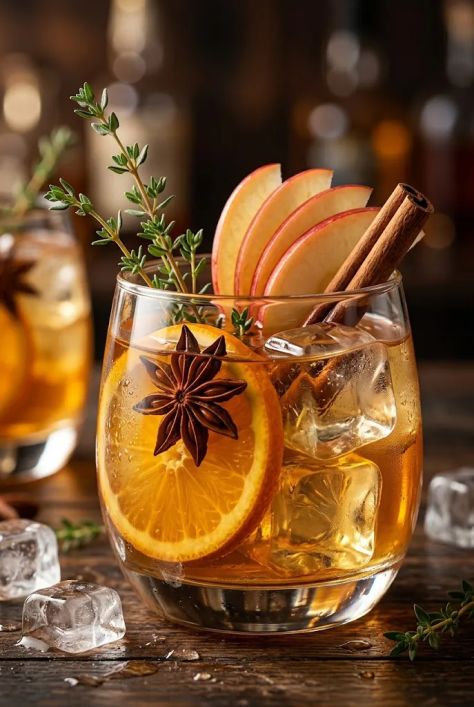
Use the uploaded image as the main visual reference. Recreate the same premium cinematic spiced amber beverage composition: the same rounded lowball glass, same transparent amber-gold drink, same large partially melted ice cubes, same thin red-edged apple slices, same two cinnamon sticks, same one whole star anise, same one glowing orange wheel, same fresh thyme sprigs, same subtle glass condensation, same loose foreground ice, same strongly blurred secondary drink, same dark rustic tabletop, same warm bar-like background, same framing, and same warm directional lighting. Do not invent a new drink color, glass shape, garnish arrangement, background, camera angle, or styling.

Generate an ultra-photorealistic premium beverage editorial / cinematic autumn-spice drink advertisement in a 2:3 vertical composition matching approximately 736 × 1104 proportional framing.

COMPOSITION — LOCK FIRST

Place the main tumbler slightly toward viewer-right of center.

The hero glass should occupy approximately:

60–65% of total frame width

55–60% of total frame height

Position the rim around the upper-middle third of the image and the heavy glass base near the lower-middle portion.

Use a close commercial food-photography perspective from slightly above the glass eye level, providing clear visibility into the drink surface and garnish arrangement.

Maintain this depth structure:

foreground main glass + loose ice → drink and primary garnishes → secondary blurred drink → indistinct tabletop/bar objects → deep dark background.

Create the major visual movement as:

long thyme stem upper-left → cinnamon/apple cluster upper-right → glass rim → star anise/orange cluster viewer-left → luminous amber center → large ice cube viewer-right → thick transparent base.

Keep the garnish composition rich but controlled. The beverage must remain the dominant subject.

MAIN GLASS

Preserve the exact rounded lowball / rocks tumbler form.

Use:

slightly outward-flaring upper walls;

rounded lower sidewalls;

thin-to-medium polished rim;

moderately thick clear glass;

heavy transparent base with a smooth curved transition.

Construct it from clear highly polished transparent glass.

Create broad curved white-gold reflections along the viewer-left/front edge and selected narrower reflections on the right.

Preserve realistic thick-glass distortion around the base.

The exterior should carry very fine condensation, especially across the front/right side, with a restrained number of tiny water beads.

The glass must not appear frosted.

No logo.

No etching.

No text.

No scratches.

AMBER BEVERAGE

Fill approximately 80–85% of the glass height with a clear spiced fruit beverage.

Use rich amber-gold through burnt-orange coloration around:

H 30–38°, S 65–85%, B 45–75%.

Keep the liquid medium-high transparency, allowing ice, fruit and internal refracted light to remain visible.

The central and lower portions should deepen toward dark amber, while backlit regions glow brighter golden-orange.

The beverage should have water-like to lightly syrup-like viscosity.

Keep the upper liquid surface calm with only minor meniscus reflections.

No visible foam.

No cream layer.

No obvious carbonation.

No thick syrup suspension.

No splash.

Do not make the drink opaque brown, bright yellow, red or orange juice.

ICE — CRITICAL

Use approximately 4–5 large visible ice cubes/chunks inside the drink.

The ice should be:

clear-to-translucent;

irregular rather than machine-perfect;

large;

partially rounded from mild melting;

wet and glossy;

internally refracting amber light.

Include faint internal cloudy fractures or trapped bubbles in selected pieces.

Place one major submerged cube prominently in the front-right portion of the glass.

Show additional clear cubes just beneath the drink surface.

Use bright cream-white specular highlights along illuminated upper-left ice edges and warm amber refraction through submerged portions.

Do not use crushed ice.

Do not fill the glass with dozens of tiny cubes.

APPLE GARNISH

Preserve approximately three thin apple slices arranged in the upper-right portion of the drink.

Each slice should be approximately 3–5 mm visually thick.

Use:

pale yellow/cream flesh around H 50–60°;

a very narrow red-pink peel edge;

moist satin-to-glossy fresh-cut surfaces.

Arrange them as an overlapping fan-like stack, tilted diagonally from lower-left toward upper-right.

Keep the lower sections partially submerged while the upper portions project above the liquid surface.

Do not show obvious apple seeds or core cavities.

The slices must remain thin and elegant rather than thick apple wedges.

CINNAMON STICKS — EXACTLY TWO

Insert exactly two prominent cinnamon sticks behind the apple slices on the upper-right.

Angle both sticks diagonally upward-right and allow them to project noticeably above the glass rim.

Keep them close together with slight overlap.

Render them as dry rolled bark in warm cinnamon brown around H 25–32°.

Preserve:

fine longitudinal bark ridges;

visible layered rolled ends;

dry matte finish;

naturally uneven broken tips.

Use narrow warm grazing highlights to emphasize the bark texture.

Do not add a third dominant cinnamon stick.

STAR ANISE — EXACTLY ONE

Place one prominent whole star anise on the viewer-left/front region of the main glass near the upper half.

Use a deep reddish-brown around H 15–25°.

Create approximately 7–8 clearly readable woody arms.

The star should face the camera almost directly.

Use a dry matte-to-satin woody finish with ridged pod texture.

Let the star anise visually overlap the orange slice and intersect with the thyme arrangement.

Keep selective rim highlights on the outer points while the center remains darker.

Do not scatter additional obvious star-anise pods inside the hero drink.

ORANGE WHEEL — EXACTLY ONE

Preserve one circular orange wheel pressed against the inner viewer-left wall of the tumbler.

Position it in the lower-left interior of the glass, mostly vertical with a slight tilt.

Use saturated golden-orange flesh and bright orange rind around H 28–35°.

Keep:

clearly visible radial citrus segments;

pale center/pith;

medium rind thickness;

moist glossy surface;

semi-translucent pulp.

Strongly backlight the orange so the internal fruit segments glow with saturated amber-orange light.

Keep most of the wheel submerged.

Do not replace it with a wedge.

FRESH THYME

Use multiple connected fresh thyme sprigs, not generic herb leaves.

Create one primary thin stem rising diagonally from the center of the glass toward the upper-left quadrant.

Let it extend prominently above the rim.

Add secondary thyme branches clustered over the drink surface and center-left.

Use:

thin green-brown stems;

small paired narrow oval leaves;

botanical green around H 95–120°;

matte-to-soft-satin leaf surfaces;

hydrated, intact foliage.

Some stems should be partially submerged while others extend upward.

Allow the tallest upper-left thyme portion to soften slightly due to depth.

The leaves must remain small and individually readable.

Do not substitute rosemary, mint, basil or oversized generic foliage.

GARNISH LAYERING

Preserve this physical relationship:

thyme crosses in front of the apple and over the beverage surface → apple slices sit beneath the cinnamon sticks → star anise overlaps the orange wheel → orange wheel remains pressed against the inner-left glass wall.

Do not scatter garnishes randomly.

FOREGROUND SURFACE

Place the tumbler on a dark rustic tabletop / bar surface.

Use deep warm brown to charcoal coloration with matte-to-low-satin finish.

Show subtle irregular grain and weathering.

Create:

a dense soft-edged contact shadow beneath the glass;

a soft amber reflection directly below it;

selected small wet reflective patches;

several loose translucent ice pieces near the lower-left/left side.

The loose ice should carry glossy surfaces and warm reflections.

Do not create a major liquid spill.

SECONDARY BACKGROUND DRINK

Place one additional beverage glass in the upper-left background.

It should appear smaller due to distance and remain strongly defocused.

Keep visible only enough information to identify:

a similar clear glass;

amber beverage;

large ice;

an orange garnish near its lower-left interior.

Create large soft cream-gold specular circles across this blurred glass.

The secondary drink must support the composition without competing with the hero glass.

BACKGROUND

Create a dark indoor bar/table environment.

Build it as layered depth rather than a flat backdrop:

Layer 1: hero drink.

Layer 2: strongly defocused secondary drink.

Layer 3: indistinct warm tabletop/bar objects.

Layer 4: deep charcoal/near-black background.

Use primarily:

near-black;

deep warm brown;

muted amber;

restrained beige/gold.

Include a soft yellow bottle/glass-like blur on viewer-right and subtle warm brown/orange forms near the center background.

Keep all background objects unrecognizable and without readable labels.

Use low-to-moderate warm bokeh consisting of soft cream, amber and orange circular/oval specular blobs.

No people.

No architecture demanding attention.

No readable text.

LIGHTING — CRITICAL

Use low-key warm cinematic beverage lighting.

Position the main directional source around 9–10 o'clock / viewer-left-front at approximately 3800–4300 K.

Use medium-soft light with controlled stronger specular response.

The lighting must produce:

bright warm-white curved reflection along viewer-left glass edge;

intense translucent amber illumination through left/center liquid;

darker orange-brown tonal falloff on viewer-right;

strong transmitted light through the orange wheel;

cream-white highlights along upper-left ice edges;

soft warm illumination across apple flesh;

narrow grazing highlights across cinnamon bark;

selective edge illumination on star anise;

tiny green-gold highlights along individual thyme leaves.

Maintain only approximately 25–35% fill, keeping the shadow side substantially darker but still readable.

Add moderate backlight through the liquid, orange and ice.

Add subtle golden rim separation along the glass and garnishes.

Allow strong amber bounce from the beverage and dark wooden tabletop.

Do not flatten the drink with bright frontal light.

SURFACE-SPECIFIC HIGHLIGHTS

Glass: broad vertical curved white-gold streaks.

Amber beverage: soft luminous golden gradients with deeper burnt-orange optical paths.

Ice: sharp cream-white edge reflections combined with diffused transparent internal glow.

Apple: soft moist glossy crescents across pale flesh.

Orange: concentrated backlit glow through individual pulp segments.

Cinnamon: narrow warm grazing lines following bark ridges.

Star anise: restrained edge highlights over dry dark woody material.

Thyme: tiny directional highlights on leaf edges.

Every material must remain visually distinct.

COLOR SYSTEM

Lock the palette to:

amber beverage: H 30–38°, S 70–90%;

burnt-orange depth: H 22–32°;

dark wood: H 20–30° with low brightness;

thyme: H 95–120° botanical green;

apple flesh: H 45–60° pale yellow-cream;

apple peel: narrow muted red-pink;

cinnamon/star anise: warm reddish-brown;

glass/ice highlights: warm cream-white.

Apply a warm autumnal amber/caramel cinematic grade with restrained botanical-green contrast.

Use deep warm-brown shadows instead of neutral blue-black.

Use golden-cream highlights.

Do not shift the image toward cold daylight, neon orange, yellow, red or green.

CAMERA / DEPTH OF FIELD

Simulate approximately a 70–100 mm food/product lens at around f/2.8–f/4.

Use intentionally shallow depth of field.

Keep the sharpest plane across:

main glass rim;

central thyme;

apple slices;

two cinnamon sticks;

star anise;

glowing orange wheel.

Keep the prominent front ice and lower glass moderately sharp.

Allow peripheral garnish edges to soften slightly.

Keep the secondary drink and background objects very strongly defocused.

Use:

grain 1–2/10;

post-processing 8–9/10;

medium-high contrast;

deep but not heavily crushed black point;

mild natural corner darkening;

minimal bloom only around strongest highlights;

no lens flare;

no chromatic aberration;

no motion blur.

VISUAL HIERARCHY

Maintain this order:

amber drink → red-edged apple slices → two cinnamon sticks → glowing orange wheel → dark star anise → fresh thyme → large refractive ice → strongly blurred secondary drink.

Maintain the material contrast:

clear polished glass + transparent amber liquid + wet refractive ice + moist fresh fruit + dry woody spices + matte fresh herbs + dark rustic wood.

STRICT PRESERVATION RULES

Do not change the lowball glass into a wine glass, highball, mug or stemmed glass.

Do not make the glass perfectly cylindrical.

Do not remove the heavy glass base.

Do not remove the fine condensation.

Do not make the drink opaque.

Do not make the beverage bright yellow or red.

Do not add foam.

Do not add visible carbonation.

Do not add a cream layer.

Do not replace the large ice with crushed ice.

Do not remove the red peel from the apple slices.

Do not make the apple slices thick wedges.

Do not use more than two dominant cinnamon sticks.

Do not remove the single prominent star anise.

Do not change the orange wheel into a wedge.

Do not substitute thyme with mint, rosemary or basil.

Do not use oversized herb leaves.

Do not remove the strongly blurred secondary drink.

Do not sharpen the background.

Do not make the tabletop bright or glossy like a studio mirror.

Do not introduce people, hands, cocktail umbrellas, straws or unrelated garnishes.

Do not add text or branding.

No people. No hands. No text. No watermark. No smoke. No steam. No splash. No large liquid spill. No artificial particle effects. No motion blur. No lens distortion.

Ultra-high resolution. Preserve clear glass optics, transparent amber depth, partially melted refractive ice, glowing citrus pulp, moist apple surfaces, dry cinnamon bark, woody star-anise texture, tiny individually readable thyme leaves, fine glass condensation, and strongly separated cinematic background depth.

Photorealistic premium cinematic beverage advertising photography only.

·
Photo Prompts

评价

登录后即可发表评价。

暂无评价。来写第一条吧。

在任何设备上使用 PromptLabHub。

安装应用以便更快打开,或下载 Chrome 扩展并在浏览器中加载。

浏览 Prompt

  • 全部 Prompt
  • 摄影 Prompt
  • 视频 Prompt
  • 美食 Prompt

创作

  • 提交 Prompt

社区

  • 论坛
  • 创作者
  • 排行榜
  • 每周挑战

支持

  • 常见问题
  • 联系我们
  • 隐私政策
  • 服务条款

关注我们

发现并复制精选 AI Prompt,适用于 Midjourney、DALL-E 3、Sora、Runway 等。每周更新。

隐私政策服务条款Cookie 政策

© 2026 PromptLabHub. All rights reserved.

© 2026 PromptLabHub. All rights reserved.

·
隐私政策·服务条款·Cookie 政策
Home
PromptLabHub
Cinematic Product Underwater Elegant Golden Hour
0
Prompt

Cinematic Product Underwater Elegant Golden Hour

Use the uploaded image as the main visual reference. Recreate the same premium cinematic spiced amber beverage composition: the same rounded lowball glass, same transparent amber-gold drink, same large partially melted ice cubes, same thin red-edged apple slices, same two cinnamon sticks, same one whole star anise, same one glowing orange wheel, same fresh thyme sprigs, same subtle glass condensation, same loose foreground ice, same strongly blurred secondary drink, same dark rustic tabletop, same warm bar-like background, same framing, and same warm directional lighting. Do not invent a new drink color, glass shape, garnish arrangement, background, camera angle, or styling.

Generate an ultra-photorealistic premium beverage editorial / cinematic autumn-spice drink advertisement in a 2:3 vertical composition matching approximately 736 × 1104 proportional framing.

COMPOSITION — LOCK FIRST

Place the main tumbler slightly toward viewer-right of center.

The hero glass should occupy approximately:

60–65% of total frame width

55–60% of total frame height

Position the rim around the upper-middle third of the image and the heavy glass base near the lower-middle portion.

Use a close commercial food-photography perspective from slightly above the glass eye level, providing clear visibility into the drink surface and garnish arrangement.

Maintain this depth structure:

foreground main glass + loose ice → drink and primary garnishes → secondary blurred drink → indistinct tabletop/bar objects → deep dark background.

Create the major visual movement as:

long thyme stem upper-left → cinnamon/apple cluster upper-right → glass rim → star anise/orange cluster viewer-left → luminous amber center → large ice cube viewer-right → thick transparent base.

Keep the garnish composition rich but controlled. The beverage must remain the dominant subject.

MAIN GLASS

Preserve the exact rounded lowball / rocks tumbler form.

Use:

slightly outward-flaring upper walls;

rounded lower sidewalls;

thin-to-medium polished rim;

moderately thick clear glass;

heavy transparent base with a smooth curved transition.

Construct it from clear highly polished transparent glass.

Create broad curved white-gold reflections along the viewer-left/front edge and selected narrower reflections on the right.

Preserve realistic thick-glass distortion around the base.

The exterior should carry very fine condensation, especially across the front/right side, with a restrained number of tiny water beads.

The glass must not appear frosted.

No logo.

No etching.

No text.

No scratches.

AMBER BEVERAGE

Fill approximately 80–85% of the glass height with a clear spiced fruit beverage.

Use rich amber-gold through burnt-orange coloration around:

H 30–38°, S 65–85%, B 45–75%.

Keep the liquid medium-high transparency, allowing ice, fruit and internal refracted light to remain visible.

The central and lower portions should deepen toward dark amber, while backlit regions glow brighter golden-orange.

The beverage should have water-like to lightly syrup-like viscosity.

Keep the upper liquid surface calm with only minor meniscus reflections.

No visible foam.

No cream layer.

No obvious carbonation.

No thick syrup suspension.

No splash.

Do not make the drink opaque brown, bright yellow, red or orange juice.

ICE — CRITICAL

Use approximately 4–5 large visible ice cubes/chunks inside the drink.

The ice should be:

clear-to-translucent;

irregular rather than machine-perfect;

large;

partially rounded from mild melting;

wet and glossy;

internally refracting amber light.

Include faint internal cloudy fractures or trapped bubbles in selected pieces.

Place one major submerged cube prominently in the front-right portion of the glass.

Show additional clear cubes just beneath the drink surface.

Use bright cream-white specular highlights along illuminated upper-left ice edges and warm amber refraction through submerged portions.

Do not use crushed ice.

Do not fill the glass with dozens of tiny cubes.

APPLE GARNISH

Preserve approximately three thin apple slices arranged in the upper-right portion of the drink.

Each slice should be approximately 3–5 mm visually thick.

Use:

pale yellow/cream flesh around H 50–60°;

a very narrow red-pink peel edge;

moist satin-to-glossy fresh-cut surfaces.

Arrange them as an overlapping fan-like stack, tilted diagonally from lower-left toward upper-right.

Keep the lower sections partially submerged while the upper portions project above the liquid surface.

Do not show obvious apple seeds or core cavities.

The slices must remain thin and elegant rather than thick apple wedges.

CINNAMON STICKS — EXACTLY TWO

Insert exactly two prominent cinnamon sticks behind the apple slices on the upper-right.

Angle both sticks diagonally upward-right and allow them to project noticeably above the glass rim.

Keep them close together with slight overlap.

Render them as dry rolled bark in warm cinnamon brown around H 25–32°.

Preserve:

fine longitudinal bark ridges;

visible layered rolled ends;

dry matte finish;

naturally uneven broken tips.

Use narrow warm grazing highlights to emphasize the bark texture.

Do not add a third dominant cinnamon stick.

STAR ANISE — EXACTLY ONE

Place one prominent whole star anise on the viewer-left/front region of the main glass near the upper half.

Use a deep reddish-brown around H 15–25°.

Create approximately 7–8 clearly readable woody arms.

The star should face the camera almost directly.

Use a dry matte-to-satin woody finish with ridged pod texture.

Let the star anise visually overlap the orange slice and intersect with the thyme arrangement.

Keep selective rim highlights on the outer points while the center remains darker.

Do not scatter additional obvious star-anise pods inside the hero drink.

ORANGE WHEEL — EXACTLY ONE

Preserve one circular orange wheel pressed against the inner viewer-left wall of the tumbler.

Position it in the lower-left interior of the glass, mostly vertical with a slight tilt.

Use saturated golden-orange flesh and bright orange rind around H 28–35°.

Keep:

clearly visible radial citrus segments;

pale center/pith;

medium rind thickness;

moist glossy surface;

semi-translucent pulp.

Strongly backlight the orange so the internal fruit segments glow with saturated amber-orange light.

Keep most of the wheel submerged.

Do not replace it with a wedge.

FRESH THYME

Use multiple connected fresh thyme sprigs, not generic herb leaves.

Create one primary thin stem rising diagonally from the center of the glass toward the upper-left quadrant.

Let it extend prominently above the rim.

Add secondary thyme branches clustered over the drink surface and center-left.

Use:

thin green-brown stems;

small paired narrow oval leaves;

botanical green around H 95–120°;

matte-to-soft-satin leaf surfaces;

hydrated, intact foliage.

Some stems should be partially submerged while others extend upward.

Allow the tallest upper-left thyme portion to soften slightly due to depth.

The leaves must remain small and individually readable.

Do not substitute rosemary, mint, basil or oversized generic foliage.

GARNISH LAYERING

Preserve this physical relationship:

thyme crosses in front of the apple and over the beverage surface → apple slices sit beneath the cinnamon sticks → star anise overlaps the orange wheel → orange wheel remains pressed against the inner-left glass wall.

Do not scatter garnishes randomly.

FOREGROUND SURFACE

Place the tumbler on a dark rustic tabletop / bar surface.

Use deep warm brown to charcoal coloration with matte-to-low-satin finish.

Show subtle irregular grain and weathering.

Create:

a dense soft-edged contact shadow beneath the glass;

a soft amber reflection directly below it;

selected small wet reflective patches;

several loose translucent ice pieces near the lower-left/left side.

The loose ice should carry glossy surfaces and warm reflections.

Do not create a major liquid spill.

SECONDARY BACKGROUND DRINK

Place one additional beverage glass in the upper-left background.

It should appear smaller due to distance and remain strongly defocused.

Keep visible only enough information to identify:

a similar clear glass;

amber beverage;

large ice;

an orange garnish near its lower-left interior.

Create large soft cream-gold specular circles across this blurred glass.

The secondary drink must support the composition without competing with the hero glass.

BACKGROUND

Create a dark indoor bar/table environment.

Build it as layered depth rather than a flat backdrop:

Layer 1: hero drink.

Layer 2: strongly defocused secondary drink.

Layer 3: indistinct warm tabletop/bar objects.

Layer 4: deep charcoal/near-black background.

Use primarily:

near-black;

deep warm brown;

muted amber;

restrained beige/gold.

Include a soft yellow bottle/glass-like blur on viewer-right and subtle warm brown/orange forms near the center background.

Keep all background objects unrecognizable and without readable labels.

Use low-to-moderate warm bokeh consisting of soft cream, amber and orange circular/oval specular blobs.

No people.

No architecture demanding attention.

No readable text.

LIGHTING — CRITICAL

Use low-key warm cinematic beverage lighting.

Position the main directional source around 9–10 o'clock / viewer-left-front at approximately 3800–4300 K.

Use medium-soft light with controlled stronger specular response.

The lighting must produce:

bright warm-white curved reflection along viewer-left glass edge;

intense translucent amber illumination through left/center liquid;

darker orange-brown tonal falloff on viewer-right;

strong transmitted light through the orange wheel;

cream-white highlights along upper-left ice edges;

soft warm illumination across apple flesh;

narrow grazing highlights across cinnamon bark;

selective edge illumination on star anise;

tiny green-gold highlights along individual thyme leaves.

Maintain only approximately 25–35% fill, keeping the shadow side substantially darker but still readable.

Add moderate backlight through the liquid, orange and ice.

Add subtle golden rim separation along the glass and garnishes.

Allow strong amber bounce from the beverage and dark wooden tabletop.

Do not flatten the drink with bright frontal light.

SURFACE-SPECIFIC HIGHLIGHTS

Glass: broad vertical curved white-gold streaks.

Amber beverage: soft luminous golden gradients with deeper burnt-orange optical paths.

Ice: sharp cream-white edge reflections combined with diffused transparent internal glow.

Apple: soft moist glossy crescents across pale flesh.

Orange: concentrated backlit glow through individual pulp segments.

Cinnamon: narrow warm grazing lines following bark ridges.

Star anise: restrained edge highlights over dry dark woody material.

Thyme: tiny directional highlights on leaf edges.

Every material must remain visually distinct.

COLOR SYSTEM

Lock the palette to:

amber beverage: H 30–38°, S 70–90%;

burnt-orange depth: H 22–32°;

dark wood: H 20–30° with low brightness;

thyme: H 95–120° botanical green;

apple flesh: H 45–60° pale yellow-cream;

apple peel: narrow muted red-pink;

cinnamon/star anise: warm reddish-brown;

glass/ice highlights: warm cream-white.

Apply a warm autumnal amber/caramel cinematic grade with restrained botanical-green contrast.

Use deep warm-brown shadows instead of neutral blue-black.

Use golden-cream highlights.

Do not shift the image toward cold daylight, neon orange, yellow, red or green.

CAMERA / DEPTH OF FIELD

Simulate approximately a 70–100 mm food/product lens at around f/2.8–f/4.

Use intentionally shallow depth of field.

Keep the sharpest plane across:

main glass rim;

central thyme;

apple slices;

two cinnamon sticks;

star anise;

glowing orange wheel.

Keep the prominent front ice and lower glass moderately sharp.

Allow peripheral garnish edges to soften slightly.

Keep the secondary drink and background objects very strongly defocused.

Use:

grain 1–2/10;

post-processing 8–9/10;

medium-high contrast;

deep but not heavily crushed black point;

mild natural corner darkening;

minimal bloom only around strongest highlights;

no lens flare;

no chromatic aberration;

no motion blur.

VISUAL HIERARCHY

Maintain this order:

amber drink → red-edged apple slices → two cinnamon sticks → glowing orange wheel → dark star anise → fresh thyme → large refractive ice → strongly blurred secondary drink.

Maintain the material contrast:

clear polished glass + transparent amber liquid + wet refractive ice + moist fresh fruit + dry woody spices + matte fresh herbs + dark rustic wood.

STRICT PRESERVATION RULES

Do not change the lowball glass into a wine glass, highball, mug or stemmed glass.

Do not make the glass perfectly cylindrical.

Do not remove the heavy glass base.

Do not remove the fine condensation.

Do not make the drink opaque.

Do not make the beverage bright yellow or red.

Do not add foam.

Do not add visible carbonation.

Do not add a cream layer.

Do not replace the large ice with crushed ice.

Do not remove the red peel from the apple slices.

Do not make the apple slices thick wedges.

Do not use more than two dominant cinnamon sticks.

Do not remove the single prominent star anise.

Do not change the orange wheel into a wedge.

Do not substitute thyme with mint, rosemary or basil.

Do not use oversized herb leaves.

Do not remove the strongly blurred secondary drink.

Do not sharpen the background.

Do not make the tabletop bright or glossy like a studio mirror.

Do not introduce people, hands, cocktail umbrellas, straws or unrelated garnishes.

Do not add text or branding.

No people. No hands. No text. No watermark. No smoke. No steam. No splash. No large liquid spill. No artificial particle effects. No motion blur. No lens distortion.

Ultra-high resolution. Preserve clear glass optics, transparent amber depth, partially melted refractive ice, glowing citrus pulp, moist apple surfaces, dry cinnamon bark, woody star-anise texture, tiny individually readable thyme leaves, fine glass condensation, and strongly separated cinematic background depth.

Photorealistic premium cinematic beverage advertising photography only.

·
Photo Prompts

评价

登录后即可发表评价。

暂无评价。来写第一条吧。

在任何设备上使用 PromptLabHub。

安装应用以便更快打开,或下载 Chrome 扩展并在浏览器中加载。

浏览 Prompt

  • 全部 Prompt
  • 摄影 Prompt
  • 视频 Prompt
  • 美食 Prompt

创作

  • 提交 Prompt

社区

  • 论坛
  • 创作者
  • 排行榜
  • 每周挑战

支持

  • 常见问题
  • 联系我们
  • 隐私政策
  • 服务条款

关注我们

发现并复制精选 AI Prompt,适用于 Midjourney、DALL-E 3、Sora、Runway 等。每周更新。

隐私政策服务条款Cookie 政策

© 2026 PromptLabHub. All rights reserved.

© 2026 PromptLabHub. All rights reserved.

·
隐私政策·服务条款·Cookie 政策
Home