
PromptLabHub
Photorealistic Product Studio Elegant Backlit Telephoto
0
Prompt

Photorealistic Product Studio Elegant Backlit Telephoto

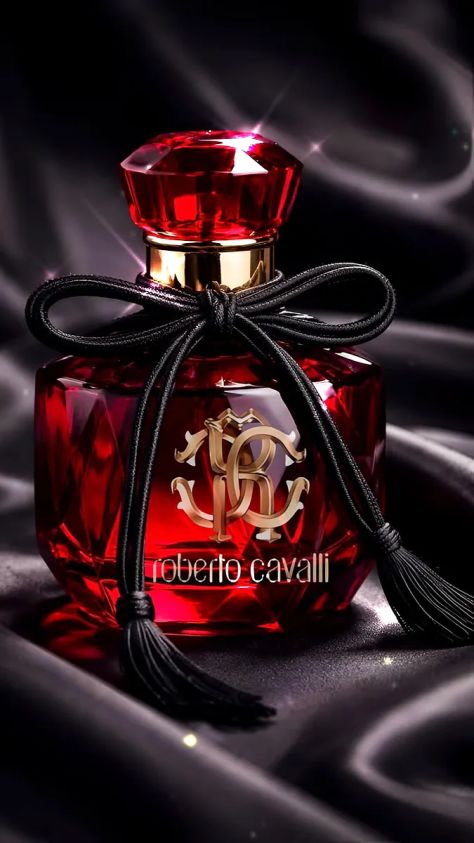
Use the uploaded image as the main visual reference. Recreate the same luxury perfume product, same dark satin studio setting, same transparent ruby-red faceted glass surfaces, polished warm-gold hardware, oversized black cord bow, two hanging tassels, metallic monogram, framing, optical reflections, and controlled sparkle lighting. Do not invent a new bottle design, new color scheme, new background, new label system, or new camera angle. Follow the uploaded image closely and apply only the precision instructions below.

Generate a maximum-photorealistic commercial luxury fragrance product photograph of the same Roberto Cavalli perfume bottle shown in the reference, composed in an approximately 9:16 vertical frame, 736 × 1308 proportional composition. Center the bottle horizontally and let the complete product, including cap and tassels, occupy approximately 58–62% of the frame height and roughly 60–65% of the frame width. Use a frontal close-up product viewpoint positioned slightly below the bottle midpoint, with compressed perspective and almost no geometric distortion. Keep the cap centered near the upper third, the bow spreading horizontally across the neck and shoulder area, and the tassels flowing into the lower foreground. Maintain strong central symmetry through the cap, collar, bottle body, monogram and label while allowing asymmetry only in the bow loops, tassel paths, reflections and surrounding satin folds.

Preserve the exact product form factor: a broad, squat rectangular luxury fragrance bottle with sculpted gemstone-like geometry, rounded-faceted shoulders, thick sharply beveled side corners, a narrower neck, and a broad flat base broken into multiple polished angular planes. Keep the visible bottle-body width approximately 0.8–0.9 times its height. Construct the body from substantial transparent high-gloss colored glass, never opaque material, using a saturated ruby/crimson spectral range around H 355–5°, S 90–100%, with brightness ranging from near-black wine/burgundy in thick shadow zones to brilliant red and nearly white specular regions. Show medium-high transparency through the body, strong internal crimson refraction, overlapping geometric red patches, dark burgundy zones, concentrated red caustic illumination in the lower glass and dense optical distortion around the beveled base.

Make the outer left glass edge carry an intense ruby rim with thin near-white highlights. Keep the right contour predominantly deep crimson-black with only selected narrow highlights. Across the front face, alternate transparent crimson planes, deep burgundy shadow facets and sharp polygonal reflections. Make the lower front glow internally like illuminated cut gemstone glass. The surface must remain perfectly smooth, hard and polished: no frosting, no matte coating, no grain, no scratches, no dust, no droplets, no condensation and no surface damage.

Preserve the exact cap as a low, broad faceted jewel-like stopper, wider than the neck, built from transparent polished ruby-red crystal/glass. Use thick angular top planes and vertically faceted side walls. Keep bright scarlet interior refractions and a concentrated brilliant white-to-faint-pink specular starburst on the upper-right/front cap facet. Maintain a mostly centered cap silhouette while letting individual facet reflections remain naturally asymmetric.

Directly beneath the cap, preserve the short thick cylindrical collar in mirror-polished warm champagne/yellow gold around H 40–48°, S 55–75%, B 75–95%. Keep its projecting rim, black mirrored bands, warm amber reflections and near-white vertical mirror highlight. Do not replace this hardware with silver, rose gold, matte metal or brushed metal.

Preserve the exact decorative black cord system. Wrap a dense multi-strand woven satin/silk-like black cord around the neck directly beneath the gold collar. Each strand should be approximately 1–1.5% of the frame width, near-black with narrow cool silver-white edge sheen that reveals fine woven ribbing. Form one oversized bow with a compact centered wrapped knot directly beneath the collar. Create a large oval loop extending horizontally toward viewer-left and a slightly longer elongated oval loop extending toward viewer-right. Keep multiple parallel strands visibly stacked along each loop instead of simplifying the bow into a flat ribbon.

Preserve two separate descending tassel cords. Run the left cord downward from the knot along the viewer-left/front of the bottle, curving inward over the glass and continuing toward the lower-left foreground. Run the right cord diagonally outward over the viewer-right bottle edge toward the lower-right. Terminate each in a long black silky tassel with a wrapped cylindrical binding and numerous individually resolved fine fibers. Keep the left tassel predominantly downward with a slight leftward diagonal. Keep the right tassel angled down-right and partially approaching/crossing the frame edge. Do not merge the tassels, remove one, shorten them excessively or convert them into ribbon ends.

Preserve the front branding precisely. Center a large dimensional intertwined ornamental R/C-style monogram on the upper-middle bottle face. Build it as an applied or embossed polished champagne-gold metallic emblem with overlapping serif/calligraphic curves, a tall central vertical structure, looping flourishes and realistic light/dark metallic dimensional shading. It should occupy approximately 28–32% of the bottle-body height.

Directly below the monogram, retain the exact lowercase “roberto cavalli” branding in thin, light-weight fashion/display lettering, moderately tracked, horizontally centered and rendered in reflective pale champagne-white/silver-white. Keep it legible through the glass reflections. Do not add a rectangular label, volume information, fragrance-name text, barcode, packaging box or any additional typography. Do not invent lettering not visible in the reference.

Keep the same supporting surface and environment: the bottle rests directly on glossy near-black satin/silk, with the same material continuing seamlessly into the background so no horizon line is visible. Construct the environment from large smooth flowing folds rather than small crumpled wrinkles. Use a near-black base with restrained cool charcoal and faint plum-gray reflections around H 270–310°, S 5–18%, B 20–45%.

Build the background as a soft multi-depth satin field: the far upper layer remains almost black and strongly defocused; broad gray-purple luminous ribbons curve around and behind the cap; a diffuse diagonal/vertical glow appears behind the viewer-left side of the cap; a softer horizontal satin sheen passes behind shoulder level; the foreground contains broad glossy ridges and deep curved valleys. Place a broad diagonal fabric ridge entering from the bottom-left, a deep dark curved valley toward the bottom-right with a narrow cool silver highlight, and subtle blurred red/gold reflections close to the bottle base. Keep the bottle contact shadow extremely dense and grounded. No architecture, no furniture, no people, no secondary props, no packaging and no visible horizon.

Reproduce the restrained optical sparkle behavior. Place the primary bright 4–6 point white starburst with a faint pink-violet halo on the top/right-front cap facet. Add a smaller subdued white-purple star flare toward the viewer-left side near the cap/bottle region and only a few tiny point-like reflected sparkles in the surrounding satin. Apply subtle controlled bloom only around the strongest highlights. Do not create a generalized glitter field, floating dust, particles, smoke, fog, mist, rain or fantasy effects.

Use a dramatic low-key commercial product-lighting system. Place the primary hard-to-medium specular source at approximately 10–11 o'clock/front-left, around 4800–5400 K, positioned to carve hard angular white/red highlights into the ruby glass while preserving deep shadow between facets. Add a concentrated pinpoint specular source around 1–2 o'clock to create the intense cap starburst. Keep fill at approximately 20–30%, allowing deep near-black and burgundy shadow zones rather than flattening the bottle. Add selective rim illumination along outer glass edges. Use warm near-white mirror reflections across the gold collar and monogram, thin cool-white linear edge highlights on the black cord and tassel fibers, and broad soft grazing illumination that traces the satin fold topology.

Maintain these surface-specific highlight geometries: angular polygonal white/crimson highlights on glass, broad smooth white-gold vertical reflections on metal, thin linear streaks on woven cord, fine directional highlights on tassel fibers, and wide curved luminous ribbons following the satin folds. Keep the background significantly darker than the perfume bottle. Do not brighten the dark corners or lift the black level excessively.

Apply a dark cinematic luxury grade dominated by saturated ruby red, near-black, champagne gold, cool charcoal/plum-gray and tiny white-pink highlights. Keep the red bottle around H 355–5°, S 90–100%, with variable brightness controlled by transparency and refraction. Keep the environment nearly black around H 240–280°, S 5–15%, B 2–8%, with restrained plum influence in reflective satin areas. Keep metal accents around H 40–48°. Use cool-neutral black/purple shadow toning against warm red/gold highlights. Maintain a visually neutral-to-cool environment with the warm product accents isolated against it. Never shift the bottle toward pink, orange, magenta, violet or opaque red.

Simulate an approximately 85–105 mm macro/product lens, approximately f/5.6–f/8, with moderate selective depth of field. Keep the front monogram, bow knot and loops, cap, gold collar and major front bottle facets extremely sharp. Allow the lower tassel tips and nearest foreground satin to soften slightly, while the far satin background becomes distinctly softer and more defocused. Place the principal focus plane around the upper-middle front of the bottle. Use essentially no visible sensor grain, approximately 1/10, and extremely polished commercial post-processing around 9/10. Preserve very high contrast, partially crushed natural black points at the outer corners, strong compositional vignette, controlled highlight bloom, minimal chromatic aberration, zero motion blur and negligible lens distortion.

Maintain the visual hierarchy exactly: first the jewel-like ruby cap and its brilliant star highlight, second the oversized black bow, third the gold ornamental monogram, fourth the transparent faceted ruby body, fifth the “roberto cavalli” lettering, sixth the two long black tassels, and finally the curved satin highlights. Maintain the vertical alignment of cap → gold collar → bow knot → monogram → brand text → lower faceted glass. Preserve the contrast between hard gemstone planes and soft curved cord/fabric forms, and between transparent glass, mirror-polished metal, woven satin cord and silky background.

Render at maximum photorealistic commercial-product quality. Follow the uploaded image as the primary reference. Preserve the exact bottle proportions, faceted geometry, transparent ruby finish, cap construction, metallic hardware, monogram placement, bow architecture, two tassels, brand treatment, camera framing, focus behavior, lighting direction, material response, color temperature, satin setting and shadow depth.

Do not alter the product shape. Do not change the finish type. Do not substitute materials. Do not change the ruby/crimson, champagne-gold and near-black color system. Do not simplify the glass refractions. Do not make the bottle opaque. Do not flatten the gemstone facets. Do not brighten the background. Do not remove either tassel. Do not replace the woven cord with ribbon. Do not obscure the monogram. Preserve the exact visible “roberto cavalli” brand marking, but add no additional text.

No extra people. No extra objects. No extra labels. No watermark. No packaging. No artificial plastic appearance. No low-detail CGI look. No scratches. No dust. No condensation. No droplets. No fog. No smoke. No generalized particles. No motion blur. No exaggerated lens distortion. Ultra-high resolution. Razor-sharp product detailing. Physically accurate transparent glass refraction, realistic mirror-polished metal, true woven-cord microtexture, individual silk tassel fibers, realistic satin weave and controlled optical bloom. Photorealistic luxury product photography only.

·
Photo Prompts

レビュー

レビューするにはログインしてください。

まだレビューはありません。最初のレビューを書きましょう。

どのデバイスでも PromptLabHub を。

アプリをインストールしてすばやく開くか、Chrome 拡張機能をダウンロードしてブラウザに読み込めます。

プロンプトを見る

  • すべての Prompt
  • 写真 Prompt
  • 動画 Prompt
  • フード Prompt

作成

  • Prompt を投稿

コミュニティ

  • フォーラム
  • クリエイター
  • リーダーボード
  • ウィークリーチャレンジ

サポート

  • よくある質問
  • お問い合わせ
  • プライバシーポリシー
  • 利用規約

フォローする

Midjourney、DALL-E 3、Sora、Runway など向けの厳選 AI Prompt を発見してコピー。毎週更新。

プライバシーポリシー利用規約Cookie ポリシー

© 2026 PromptLabHub. All rights reserved.

© 2026 PromptLabHub. All rights reserved.

·
プライバシーポリシー·利用規約·Cookie ポリシー
Home
PromptLabHub
Photorealistic Product Studio Elegant Backlit Telephoto
0
Prompt

Photorealistic Product Studio Elegant Backlit Telephoto

Use the uploaded image as the main visual reference. Recreate the same luxury perfume product, same dark satin studio setting, same transparent ruby-red faceted glass surfaces, polished warm-gold hardware, oversized black cord bow, two hanging tassels, metallic monogram, framing, optical reflections, and controlled sparkle lighting. Do not invent a new bottle design, new color scheme, new background, new label system, or new camera angle. Follow the uploaded image closely and apply only the precision instructions below.

Generate a maximum-photorealistic commercial luxury fragrance product photograph of the same Roberto Cavalli perfume bottle shown in the reference, composed in an approximately 9:16 vertical frame, 736 × 1308 proportional composition. Center the bottle horizontally and let the complete product, including cap and tassels, occupy approximately 58–62% of the frame height and roughly 60–65% of the frame width. Use a frontal close-up product viewpoint positioned slightly below the bottle midpoint, with compressed perspective and almost no geometric distortion. Keep the cap centered near the upper third, the bow spreading horizontally across the neck and shoulder area, and the tassels flowing into the lower foreground. Maintain strong central symmetry through the cap, collar, bottle body, monogram and label while allowing asymmetry only in the bow loops, tassel paths, reflections and surrounding satin folds.

Preserve the exact product form factor: a broad, squat rectangular luxury fragrance bottle with sculpted gemstone-like geometry, rounded-faceted shoulders, thick sharply beveled side corners, a narrower neck, and a broad flat base broken into multiple polished angular planes. Keep the visible bottle-body width approximately 0.8–0.9 times its height. Construct the body from substantial transparent high-gloss colored glass, never opaque material, using a saturated ruby/crimson spectral range around H 355–5°, S 90–100%, with brightness ranging from near-black wine/burgundy in thick shadow zones to brilliant red and nearly white specular regions. Show medium-high transparency through the body, strong internal crimson refraction, overlapping geometric red patches, dark burgundy zones, concentrated red caustic illumination in the lower glass and dense optical distortion around the beveled base.

Make the outer left glass edge carry an intense ruby rim with thin near-white highlights. Keep the right contour predominantly deep crimson-black with only selected narrow highlights. Across the front face, alternate transparent crimson planes, deep burgundy shadow facets and sharp polygonal reflections. Make the lower front glow internally like illuminated cut gemstone glass. The surface must remain perfectly smooth, hard and polished: no frosting, no matte coating, no grain, no scratches, no dust, no droplets, no condensation and no surface damage.

Preserve the exact cap as a low, broad faceted jewel-like stopper, wider than the neck, built from transparent polished ruby-red crystal/glass. Use thick angular top planes and vertically faceted side walls. Keep bright scarlet interior refractions and a concentrated brilliant white-to-faint-pink specular starburst on the upper-right/front cap facet. Maintain a mostly centered cap silhouette while letting individual facet reflections remain naturally asymmetric.

Directly beneath the cap, preserve the short thick cylindrical collar in mirror-polished warm champagne/yellow gold around H 40–48°, S 55–75%, B 75–95%. Keep its projecting rim, black mirrored bands, warm amber reflections and near-white vertical mirror highlight. Do not replace this hardware with silver, rose gold, matte metal or brushed metal.

Preserve the exact decorative black cord system. Wrap a dense multi-strand woven satin/silk-like black cord around the neck directly beneath the gold collar. Each strand should be approximately 1–1.5% of the frame width, near-black with narrow cool silver-white edge sheen that reveals fine woven ribbing. Form one oversized bow with a compact centered wrapped knot directly beneath the collar. Create a large oval loop extending horizontally toward viewer-left and a slightly longer elongated oval loop extending toward viewer-right. Keep multiple parallel strands visibly stacked along each loop instead of simplifying the bow into a flat ribbon.

Preserve two separate descending tassel cords. Run the left cord downward from the knot along the viewer-left/front of the bottle, curving inward over the glass and continuing toward the lower-left foreground. Run the right cord diagonally outward over the viewer-right bottle edge toward the lower-right. Terminate each in a long black silky tassel with a wrapped cylindrical binding and numerous individually resolved fine fibers. Keep the left tassel predominantly downward with a slight leftward diagonal. Keep the right tassel angled down-right and partially approaching/crossing the frame edge. Do not merge the tassels, remove one, shorten them excessively or convert them into ribbon ends.

Preserve the front branding precisely. Center a large dimensional intertwined ornamental R/C-style monogram on the upper-middle bottle face. Build it as an applied or embossed polished champagne-gold metallic emblem with overlapping serif/calligraphic curves, a tall central vertical structure, looping flourishes and realistic light/dark metallic dimensional shading. It should occupy approximately 28–32% of the bottle-body height.

Directly below the monogram, retain the exact lowercase “roberto cavalli” branding in thin, light-weight fashion/display lettering, moderately tracked, horizontally centered and rendered in reflective pale champagne-white/silver-white. Keep it legible through the glass reflections. Do not add a rectangular label, volume information, fragrance-name text, barcode, packaging box or any additional typography. Do not invent lettering not visible in the reference.

Keep the same supporting surface and environment: the bottle rests directly on glossy near-black satin/silk, with the same material continuing seamlessly into the background so no horizon line is visible. Construct the environment from large smooth flowing folds rather than small crumpled wrinkles. Use a near-black base with restrained cool charcoal and faint plum-gray reflections around H 270–310°, S 5–18%, B 20–45%.

Build the background as a soft multi-depth satin field: the far upper layer remains almost black and strongly defocused; broad gray-purple luminous ribbons curve around and behind the cap; a diffuse diagonal/vertical glow appears behind the viewer-left side of the cap; a softer horizontal satin sheen passes behind shoulder level; the foreground contains broad glossy ridges and deep curved valleys. Place a broad diagonal fabric ridge entering from the bottom-left, a deep dark curved valley toward the bottom-right with a narrow cool silver highlight, and subtle blurred red/gold reflections close to the bottle base. Keep the bottle contact shadow extremely dense and grounded. No architecture, no furniture, no people, no secondary props, no packaging and no visible horizon.

Reproduce the restrained optical sparkle behavior. Place the primary bright 4–6 point white starburst with a faint pink-violet halo on the top/right-front cap facet. Add a smaller subdued white-purple star flare toward the viewer-left side near the cap/bottle region and only a few tiny point-like reflected sparkles in the surrounding satin. Apply subtle controlled bloom only around the strongest highlights. Do not create a generalized glitter field, floating dust, particles, smoke, fog, mist, rain or fantasy effects.

Use a dramatic low-key commercial product-lighting system. Place the primary hard-to-medium specular source at approximately 10–11 o'clock/front-left, around 4800–5400 K, positioned to carve hard angular white/red highlights into the ruby glass while preserving deep shadow between facets. Add a concentrated pinpoint specular source around 1–2 o'clock to create the intense cap starburst. Keep fill at approximately 20–30%, allowing deep near-black and burgundy shadow zones rather than flattening the bottle. Add selective rim illumination along outer glass edges. Use warm near-white mirror reflections across the gold collar and monogram, thin cool-white linear edge highlights on the black cord and tassel fibers, and broad soft grazing illumination that traces the satin fold topology.

Maintain these surface-specific highlight geometries: angular polygonal white/crimson highlights on glass, broad smooth white-gold vertical reflections on metal, thin linear streaks on woven cord, fine directional highlights on tassel fibers, and wide curved luminous ribbons following the satin folds. Keep the background significantly darker than the perfume bottle. Do not brighten the dark corners or lift the black level excessively.

Apply a dark cinematic luxury grade dominated by saturated ruby red, near-black, champagne gold, cool charcoal/plum-gray and tiny white-pink highlights. Keep the red bottle around H 355–5°, S 90–100%, with variable brightness controlled by transparency and refraction. Keep the environment nearly black around H 240–280°, S 5–15%, B 2–8%, with restrained plum influence in reflective satin areas. Keep metal accents around H 40–48°. Use cool-neutral black/purple shadow toning against warm red/gold highlights. Maintain a visually neutral-to-cool environment with the warm product accents isolated against it. Never shift the bottle toward pink, orange, magenta, violet or opaque red.

Simulate an approximately 85–105 mm macro/product lens, approximately f/5.6–f/8, with moderate selective depth of field. Keep the front monogram, bow knot and loops, cap, gold collar and major front bottle facets extremely sharp. Allow the lower tassel tips and nearest foreground satin to soften slightly, while the far satin background becomes distinctly softer and more defocused. Place the principal focus plane around the upper-middle front of the bottle. Use essentially no visible sensor grain, approximately 1/10, and extremely polished commercial post-processing around 9/10. Preserve very high contrast, partially crushed natural black points at the outer corners, strong compositional vignette, controlled highlight bloom, minimal chromatic aberration, zero motion blur and negligible lens distortion.

Maintain the visual hierarchy exactly: first the jewel-like ruby cap and its brilliant star highlight, second the oversized black bow, third the gold ornamental monogram, fourth the transparent faceted ruby body, fifth the “roberto cavalli” lettering, sixth the two long black tassels, and finally the curved satin highlights. Maintain the vertical alignment of cap → gold collar → bow knot → monogram → brand text → lower faceted glass. Preserve the contrast between hard gemstone planes and soft curved cord/fabric forms, and between transparent glass, mirror-polished metal, woven satin cord and silky background.

Render at maximum photorealistic commercial-product quality. Follow the uploaded image as the primary reference. Preserve the exact bottle proportions, faceted geometry, transparent ruby finish, cap construction, metallic hardware, monogram placement, bow architecture, two tassels, brand treatment, camera framing, focus behavior, lighting direction, material response, color temperature, satin setting and shadow depth.

Do not alter the product shape. Do not change the finish type. Do not substitute materials. Do not change the ruby/crimson, champagne-gold and near-black color system. Do not simplify the glass refractions. Do not make the bottle opaque. Do not flatten the gemstone facets. Do not brighten the background. Do not remove either tassel. Do not replace the woven cord with ribbon. Do not obscure the monogram. Preserve the exact visible “roberto cavalli” brand marking, but add no additional text.

No extra people. No extra objects. No extra labels. No watermark. No packaging. No artificial plastic appearance. No low-detail CGI look. No scratches. No dust. No condensation. No droplets. No fog. No smoke. No generalized particles. No motion blur. No exaggerated lens distortion. Ultra-high resolution. Razor-sharp product detailing. Physically accurate transparent glass refraction, realistic mirror-polished metal, true woven-cord microtexture, individual silk tassel fibers, realistic satin weave and controlled optical bloom. Photorealistic luxury product photography only.

·
Photo Prompts

レビュー

レビューするにはログインしてください。

まだレビューはありません。最初のレビューを書きましょう。

どのデバイスでも PromptLabHub を。

アプリをインストールしてすばやく開くか、Chrome 拡張機能をダウンロードしてブラウザに読み込めます。

プロンプトを見る

  • すべての Prompt
  • 写真 Prompt
  • 動画 Prompt
  • フード Prompt

作成

  • Prompt を投稿

コミュニティ

  • フォーラム
  • クリエイター
  • リーダーボード
  • ウィークリーチャレンジ

サポート

  • よくある質問
  • お問い合わせ
  • プライバシーポリシー
  • 利用規約

フォローする

Midjourney、DALL-E 3、Sora、Runway など向けの厳選 AI Prompt を発見してコピー。毎週更新。

プライバシーポリシー利用規約Cookie ポリシー

© 2026 PromptLabHub. All rights reserved.

© 2026 PromptLabHub. All rights reserved.

·
プライバシーポリシー·利用規約·Cookie ポリシー
Home