Best AI Infographic Prompts.
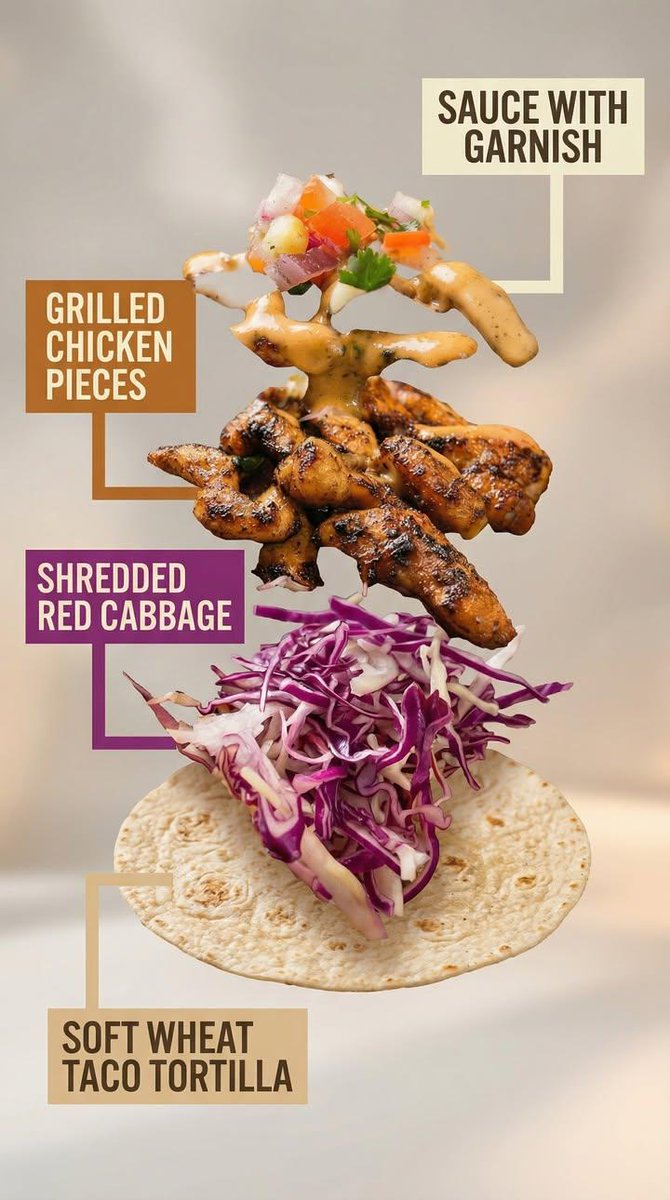

A high-end commercial food photograph of the same two tacos from the reference image, preserving their exact structure, fillings, proportions, and arrangement. The camera angle is slightly adjusted to a more flattering three-quarter close-up, enhancing depth and appetite appeal without altering the tacos themselves. Soft cinematic lighting highlights the textures of the tortillas and fillings, with subtle steam and natural sheen to emphasize freshness. The background is replaced with a clean, modern, out-of-focus setting in warm complementary tones that enhance the food without distracting from it. Shallow depth of field, crisp focus on the tacos, rich contrast, natural colors, and premium restaurant advertising quality. No added or removed ingredients, refined composition, lighting, and environment. Image 2: Exploded-view commercial visualization of the taco from the image, presented as premium recipe-style breakdown. The taco is deconstructed into four visible ingredients, matching the original taco precisely in composition, color, and texture. No additional ingredients. The ingredients are separated and arranged in a clean vertical stack, evenly spaced from bottom to top, floating in place with precise alignment and symmetry. Ingredient order (bottom → top): Soft wheat taco tortilla Shredded red cabbage Grilled chicken pieces Sauce with garnish (topped with a small mixed garnish of diced onion, tomato, and parsley, approximately 5–6 small cubes total, lightly mixed, placed naturally on top) Each ingredient is visually distinct and clearly readable in shape and texture. Annotation design requirements: – Large, bold sans-serif font, high legibility at feed scale – Each annotation placed inside a solid or softly rounded rectangular color block – Background color of each block corresponds subtly to the ingredient color (tomato red, lettuce green, meat warm brown, sauce white/cream, pita beige) – High contrast text (dark on light, light on dark) – Thick, clean connector lines pointing clearly to each ingredient – No transparency that reduces readability – Annotations must visually dominate over background without covering ingredients Background is soft, neutral, and atmospheric, with subtle depth and gentle gradients, inspired by premium food advertising. Overall style is clean, modern, and appetizing, commercial-ready without technical or schematic feel. No extra elements, no substitutions, no reinterpretation of ingredients.
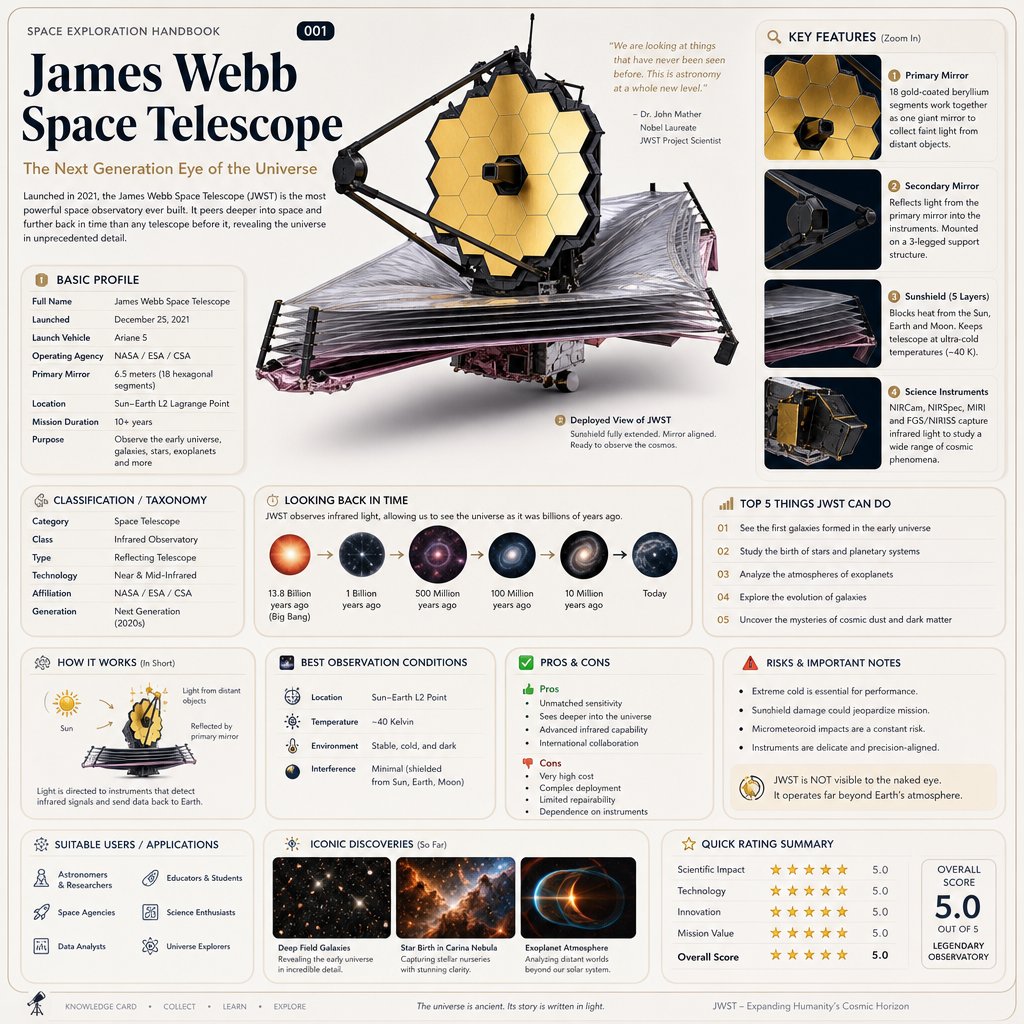
Based on , create a high-quality vertical “encyclopedia-style educational infographic image.” This image should NOT look like a regular poster or a simple illustration. Instead, it should feel like a structured knowledge guide that combines: the feeling of a collectible reference handbook a modern encyclopedia page a lifestyle knowledge card and a highly shareable social-media infographic The overall style should resemble a premium natural-history guidebook mixed with modern editorial infographic design. The image should include: One beautiful and highly detailed main subject image Several zoomed-in detail sections highlighting important features Multiple modular information panels with rounded corners Clear title hierarchy and highlighted key labels Concise yet information-rich encyclopedia content Visual scoring systems, quick summaries, or “Top 5” modules The information sections should automatically adapt to the topic. Select and combine relevant categories such as: Basic profile Classification / taxonomy Physical characteristics Behavior / ecology / habits Structure or formation mechanisms Growth conditions or usage methods Care, maintenance, or optimization tips Risks, warnings, and important notes Suitable users or application scenarios Pros and cons comparison Quick rating tags or summary cards Visual requirements: Clean light-colored background Soft and elegant color palette Gentle shadows Small refined icons Rounded information boxes Organized editorial layout High information density without feeling crowded Comfortable reading experience The final result should feel like a real publishable encyclopedia knowledge card designed for reading, collecting, and creating as part of a consistent series — NOT like a commercial advertisement poster. The image must strongly emphasize: “knowledge integration + modular information design + handbook/reference-style presentation.”
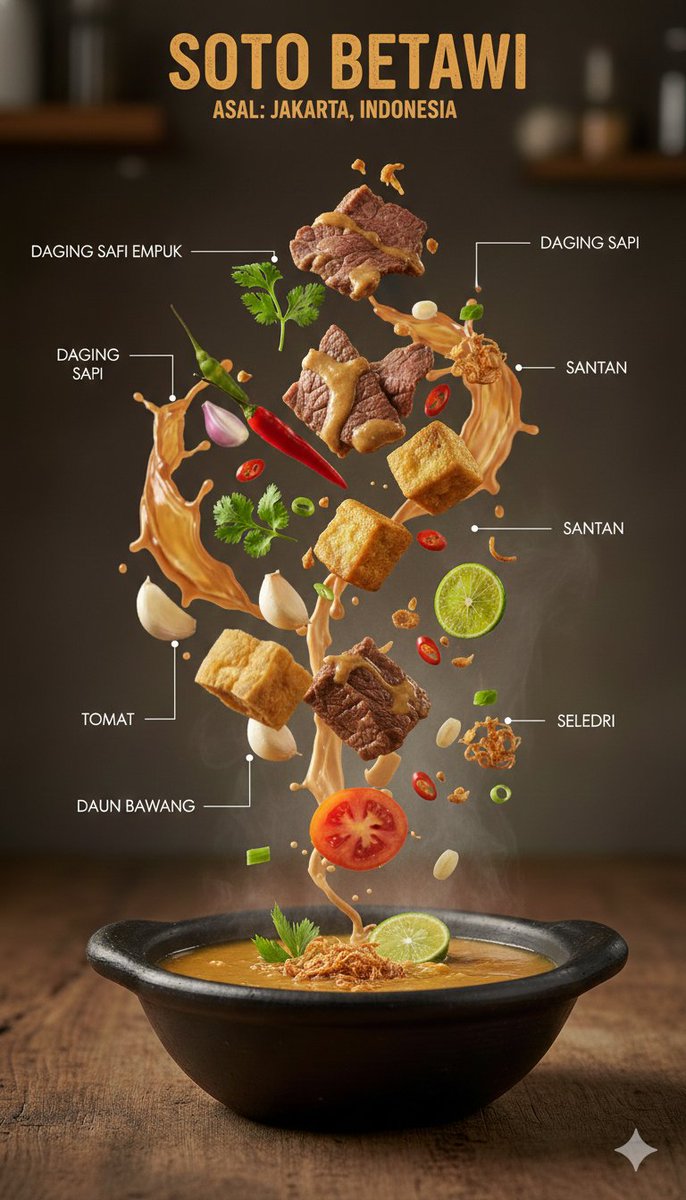
{ "image_prompt": { "type": "Ultra-realistic culinary infographic", "subject": { "cuisine": "Indonesian", "base_element": "A traditional serving bowl holding a steaming hot dish", "levitating_ingredients": }, "composition": { "layout": "Minimal, vertically stacked layout", "arrangement": "Ingredients floating naturally as if suspended in motion", "background": "Textured rustic wooden tabletop", "visual_hierarchy": "The bowl remains grounded at the base, with ingredients ascending above it" }, "graphic_design_elements": { "labels": "Clean Indonesian-language annotations", "lines": "Fine white connector lines", "style": "High-end editorial food infographic, magazine-quality design" }, "lighting_and_mood": { "lighting": "Controlled cinematic studio lighting", "color_palette": "Warm, appetizing color tones", "effects": "Visible steam and frozen-action food elements" }, "technical_specs": { "camera_settings": "Shallow depth of field with crisp focal detail, DSLR-style capture", "details": "Extremely detailed surface textures", "resolution": "8K, photorealistic finish" } } }
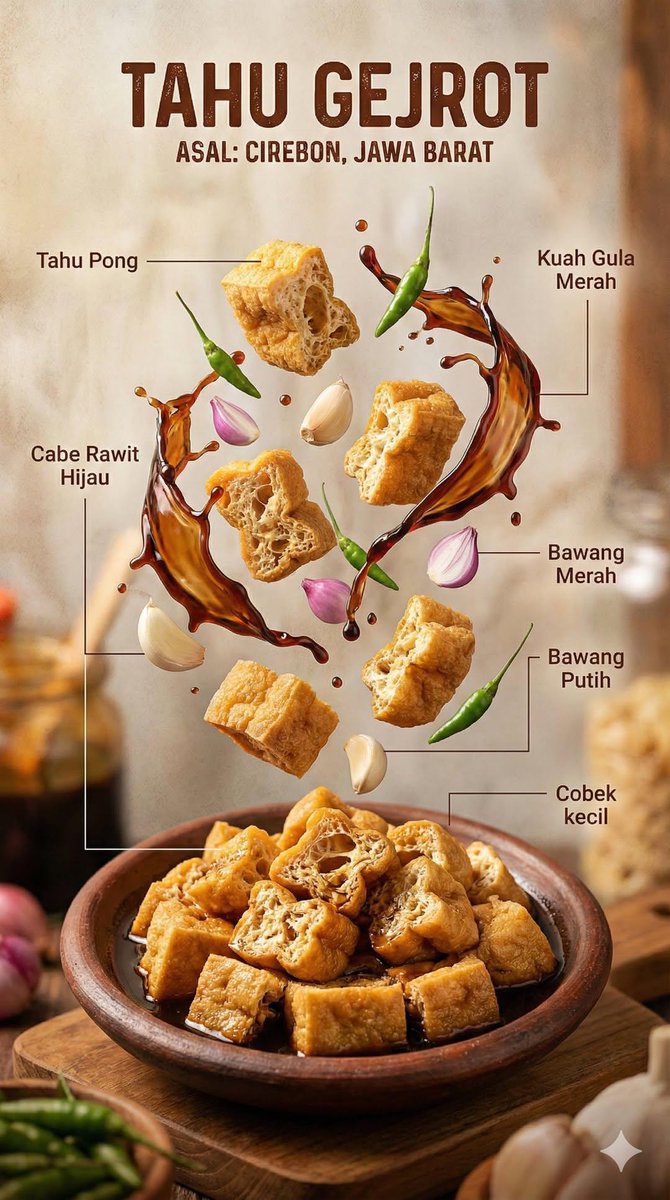
{ "image_prompt": { "type": "Hyper-realistic food infographic", "subject": { "cuisine": "Indonesian", "base_element": "Traditional bowl with steaming hot dish at the bottom", "levitating_ingredients": }, "composition": { "layout": "Clean vertical composition", "arrangement": "Realistic gravity-defying/floating elements", "background": "Rustic wooden surface", "visual_hierarchy": "Bowl anchored at bottom, ingredients rising vertically" }, "graphic_design_elements": { "labels": "Clear Indonesian text", "lines": "Thin white pointing lines", "style": "Editorial infographic layout, professional food magazine style" }, "lighting_and_mood": { "lighting": "Cinematic studio lighting", "color_palette": "Warm tones", "effects": "Dramatic steam, motion-frozen ingredients" }, "technical_specs": { "camera_settings": "Shallow depth of field, sharp focus, DSLR look", "details": "Ultra-detailed textures", "resolution": "8K ultra-realistic" } } }
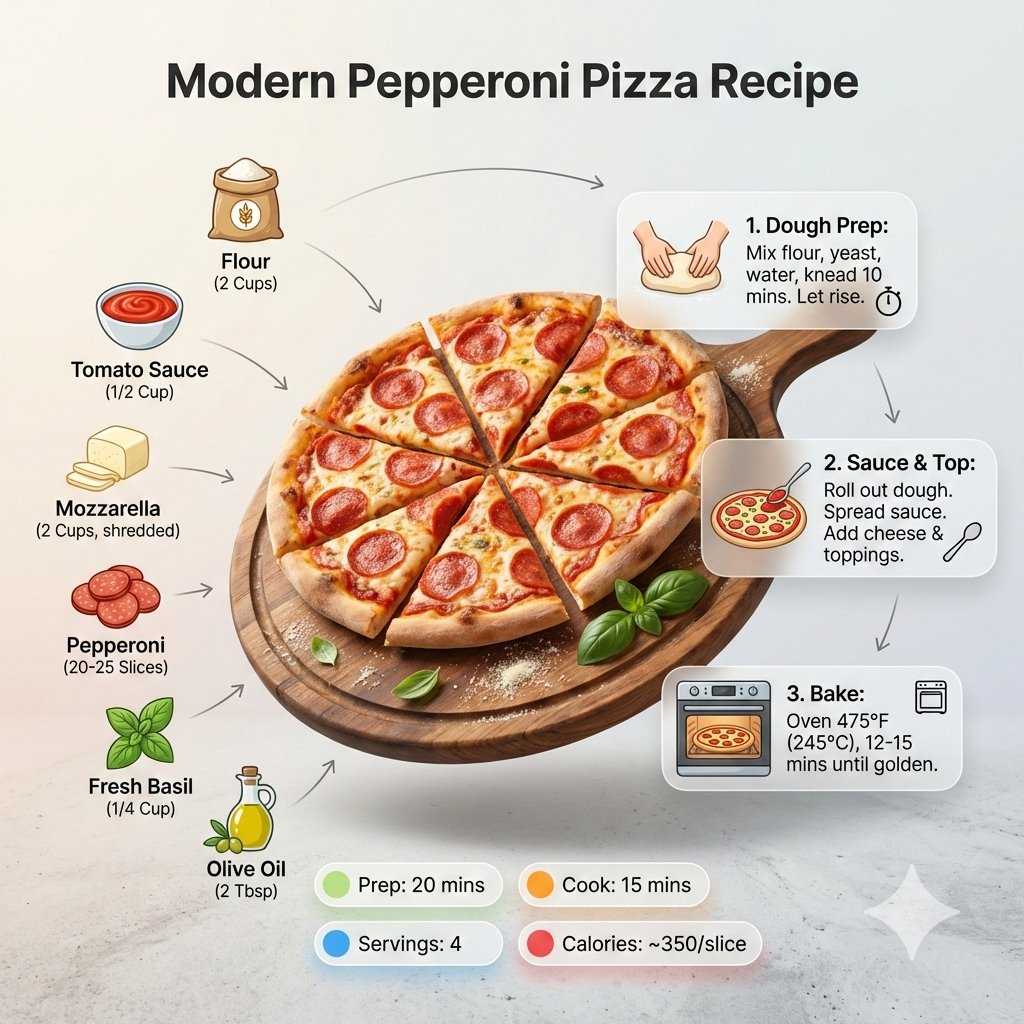
Ultra-clean modern recipe infographic. Showcase Pizza in a visually appealing finished form—sliced, plated, or portioned—floating slightly in perspective or angled view. Arrange ingredients, steps, and tips around the dish in a dynamic editorial layout, not restricted to top-down. Ingredients Section: Include icons or mini illustrations for each ingredient with quantities. Arrange them in clusters, lists, or circular flows connected visually to the dish. Steps Section: Show preparation steps with numbered panels, arrows, or lines, forming a logical flow around the main dish. Include small cooking icons (knife, pan, oven, timer) where helpful. Additional Info (optional): Total calories, prep/cook time, servings, spice level—displayed as clean bubbles or badges near the dish. Visual Style: Editorial infographic meets lifestyle food photography. Vibrant, natural food colors, subtle drop shadows, clean vector icons, modern typography, soft gradients or glassmorphism for step panels. Accent colors can highlight key info (calories, prep time). Composition Guidelines: Finished meal as hero visual (perspective or angled) Ingredients and steps flow dynamically around the dish Clear visual hierarchy: dish > steps > ingredients > optional stats Enough negative space to keep design airy and readable Lighting & Background: Soft, natural studio lighting, minimal textured or gradient background for premium editorial feel. Output: 1080×1080, ultra-crisp, social-feed optimized, no watermark.”
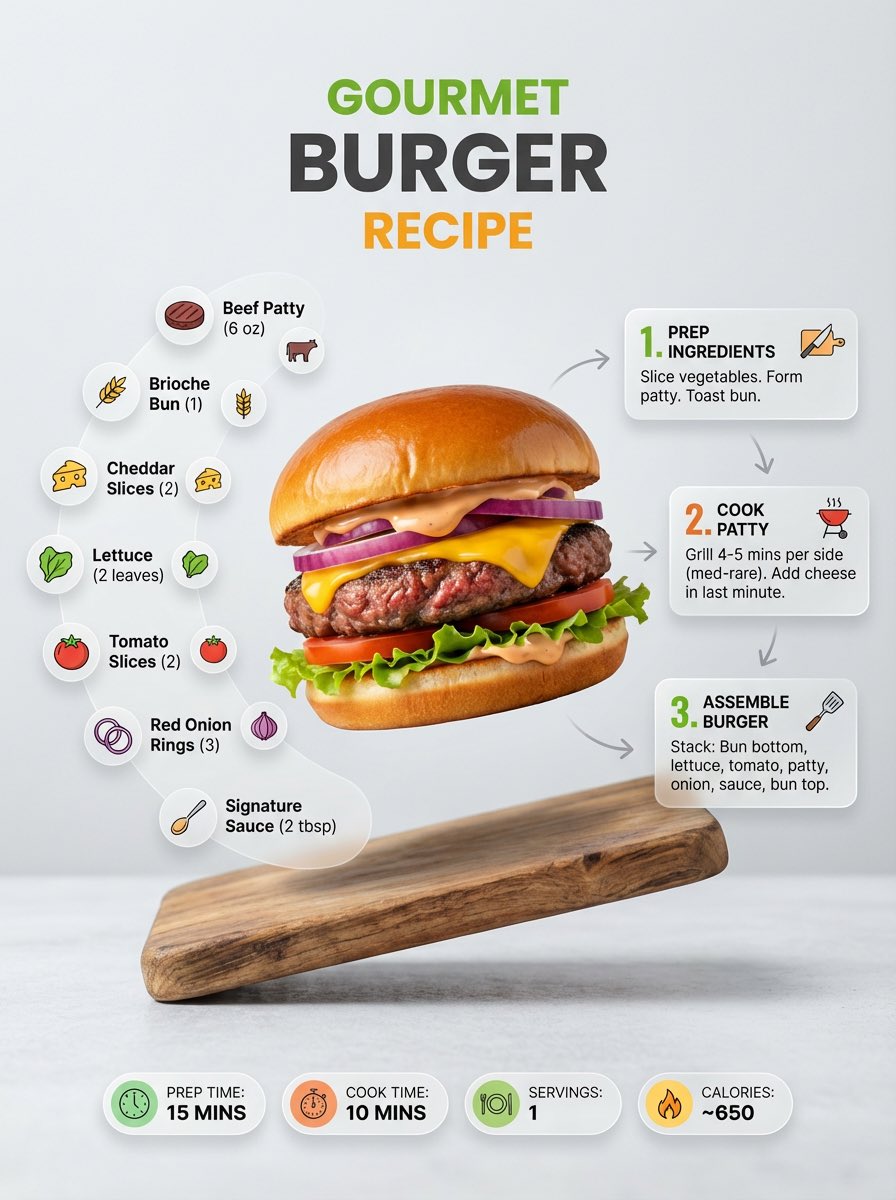
Ultra-clean modern recipe infographic. Showcase in a visually appealing finished form—sliced, plated, or portioned—floating slightly in perspective or angled view. Arrange ingredients, steps, and tips around the dish in a dynamic editorial layout, not restricted to top-down. Ingredients Section: Include icons or mini illustrations for each ingredient with quantities. Arrange them in clusters, lists, or circular flows connected visually to the dish. Steps Section: Show preparation steps with numbered panels, arrows, or lines, forming a logical flow around the main dish. Include small cooking icons (knife, pan, oven, timer) where helpful. Additional Info (optional): Total calories, prep/cook time, servings, spice level—displayed as clean bubbles or badges near the dish. Visual Style: Editorial infographic meets lifestyle food photography. Vibrant, natural food colors, subtle drop shadows, clean vector icons, modern typography, soft gradients or glassmorphism for step panels. Accent colors can highlight key info (calories, prep time). Composition Guidelines: Finished meal as hero visual (perspective or angled) Ingredients and steps flow dynamically around the dish Clear visual hierarchy: dish > steps > ingredients > optional stats Enough negative space to keep design airy and readable Lighting & Background: Soft, natural studio lighting, minimal textured or gradient background for premium editorial feel. Output: 1080×1080, ultra-crisp, social-feed optimized, no watermark