
PromptLabHub
Vibrant Portrait Interior Elegant Natural Bokeh
1
1
Prompt

Vibrant Portrait Interior Elegant Natural Bokeh

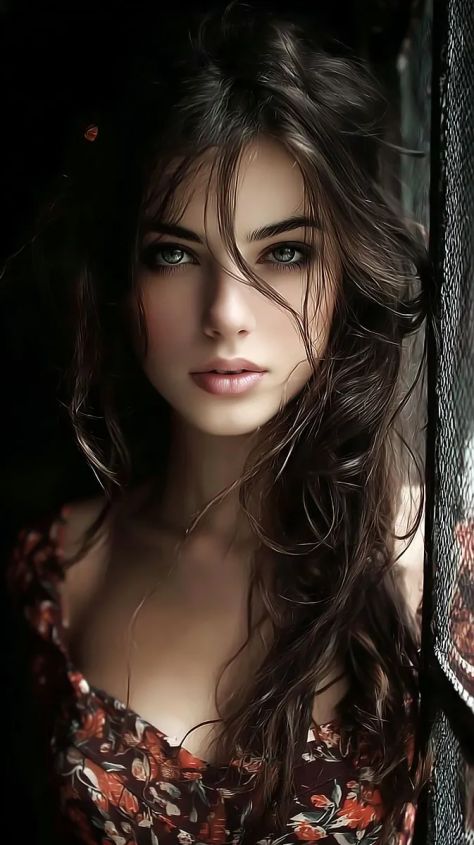
Use the uploaded image as the main visual reference. Recreate the same subject, same dark interior setting beside the textured vertical window/screen panel, same floral fitted garment, same long voluminous wavy hair, same chest-up framing, same facial identity, same direct gaze, same softly polished complexion, and same warm cinematic low-key atmosphere. Do not invent a new face, new hairstyle, new clothing design, new makeup, new background, new accessories, or new camera angle. Follow the uploaded image closely and apply only the corrections below.

Generate a polished semi-photorealistic cinematic editorial beauty portrait of the same subject in a 9:16 vertical composition. Frame from the top of the hair through the upper torso and chest, cutting the lower body below the bust line. Keep the face slightly right of center, let the hair occupy substantial space on both sides, and preserve the bright environmental edge along frame-right beside the vertical textured panel. Use an eye-level camera with a nearly frontal view and only a subtle three-quarter facial orientation. Keep the torso approximately frontal with slight rotation, shoulders relaxed and naturally uneven from the pose, the head directed toward the camera, and a very slight tilt toward frame-right. Use approximately 85 mm equivalent portrait compression, aperture behavior around f/2.2, shallow depth of field, grain level 1/10, and post-processing intensity approximately 8/10.

Preserve the same facial identity and exact visible facial proportions from the uploaded image. Maintain a soft oval face tapering gradually into a narrow rounded chin, a gently defined jawline, moderate cheekbone prominence, balanced forehead-to-midface proportions, softly tapered lower face, and the same brow-to-eye spacing, nose-to-lip distance, lip proportions, chin width, and jaw angle visible in the reference. Do not broaden the jaw, sharpen the chin excessively, enlarge the cheekbones, shorten the midface, or modify the subject into a different person.

Render the skin with a light-to-medium warm beige base around H 28–34°, low-to-medium saturation and high brightness, carrying peach-golden undertones rather than neutral gray or pink-only coloration. In illuminated zones, shift toward warm peach-beige around H 28–35° with low-to-medium saturation and high brightness. In shadow zones, transition into muted warm brown around H 24–30° with lower saturation and substantially reduced brightness while retaining slight neutral-cool contamination in the deepest surrounding shadows. Keep the skin warmer and brighter than the environment.

Use a satin skin finish with controlled luminous reflectivity. Place soft broad highlights across the central forehead, nose bridge, nose tip, frame-right upper cheek, upper-lip ridge, and central lower lip. Keep these highlights smooth and diffused rather than wet or oily. Maintain weaker skin-colored bounce across the lower cheek, neck, and upper chest.

Maintain skin retouching at approximately 8/10. Strongly smooth pore structure and fine surface irregularity across the forehead, cheeks, jaw, and chin while retaining controlled anatomical detail around the eyelids, brows, nostrils, philtrum, lip edges, and fine lip texture. Preserve only faint microtexture in the brightest cheek and nose regions. The complexion should appear highly even and editorially polished but must retain enough tonal variation and microscopic detail to avoid a completely textureless synthetic surface. Do not introduce pronounced pores, acne texture, freckles, scars, facial markings, or excessive skin grain. Do not flatten the entire face into plastic skin.

Preserve both eyes as large almond shapes with slightly elevated outer corners and clearly defined upper lids. Keep both eyes fully open at the same openness level as the uploaded reference. Direct both eyes straight toward the camera with no lateral, upward, or downward deviation. Do not alter the gaze.

Render each iris as a muted sage gray-green around H 100–115°, low-to-moderate saturation and medium-light brightness. Preserve subtle radial iris variation and a darker charcoal-green limbal ring around H 105–115° at low saturation and low brightness. Keep the pupils medium-sized and dark. Add small soft rectangular-to-vertical catchlight reflections in the upper iris areas, matching the window-like key source. Keep catchlights restrained and natural rather than circular studio rings or oversized white reflections.

Preserve dark moderately dense upper lashes with individually readable tapered strands and restrained lower-lash visibility. Apply soft taupe-brown-to-charcoal eyeshadow around H 25–35° at low saturation and low brightness, concentrated along the upper lash line, crease edge, and outer eye. Blend the pigment softly into surrounding skin with no hard graphic border. Maintain dark brown-to-near-black upper liner around H 20–25° with extremely low brightness, closely following the upper lash line and blending naturally into the eye shadow. Keep mascara present or digitally intensified while avoiding oversized false-lash density. Do not add winged graphic liner, shimmer, glitter, colored eyeshadow, under-eye glitter, or stronger cosmetic elements.

Preserve the thick dark brows with a softly angled shape, broad density, and individually visible hair strokes. Use deep neutral-to-warm brown around H 22–28°, low saturation and very low brightness. Keep the brows moderately groomed without sharp carved borders. Preserve the original distance from the eyes and the same overall brow thickness. Do not thin, overarch, laminate, bleach, or heavily block-fill the brows.

Maintain an even medium-to-full complexion base while keeping the overall face dimensional under directional light. Add only a subtle warm peach-rose blush around H 12–22°, low-to-medium saturation and medium brightness, concentrated softly across the mid-cheek region. Keep blush diffusion broad and low contrast. Do not add strong contouring, bronzer bands, highlighter streaks, or visible powder texture.

Render the lips in pale dusty rose around H 350–8° with low-to-moderate saturation and medium-high brightness, carrying a restrained mauve-beige undertone. Preserve a satin-gloss finish with a controlled bright highlight concentrated in the center of the lower lip and smaller reflectivity along the upper-lip ridge. Retain fine vertical lip texture rather than completely smoothing the lip surface. Keep the lower lip approximately 1.35 times fuller than the upper lip and preserve the softly but clearly defined cupid’s bow. Keep the lips gently parted by only a narrow natural opening. Do not expose prominent teeth. Do not change the lip color toward vivid red, pink, orange, brown, or nude beige.

Preserve the expression mechanics exactly: keep the frontalis relaxed with no forehead contraction, brows approximately level, orbicularis oculi minimally contracted, upper and lower eyelids relaxed, mouth corners approximately neutral, lips gently parted, orbicularis oris relaxed, mentalis without visible contraction, and neck musculature inactive. Do not introduce a smile, frown, eyebrow lift, squint, pout, or exaggerated expression.

Preserve the same long, highly voluminous hair. Use a deep espresso-brown base around H 20–27°, low saturation and very low brightness, transitioning into warmer chestnut reflections around H 25–32° with low-to-medium saturation and medium brightness where the key light strikes. Keep the overall hair substantially darker than the skin.

Maintain a loosely gathered crown section with high volume while allowing the majority of the hair to descend in long loose waves and sculpted curls around the face, shoulders, and frame-right side. Preserve an irregular near-center part partly obscured by loose strands. Keep several fine strands falling vertically and diagonally across the forehead, nose bridge, cheek, and facial edge. Maintain additional loose strands around the outer hair contour and several fine flyaways around the crown.

Render the hair fiber structure with defined strand bundles, readable directional ridges, layered wave clumps, tapered individual hairs at contour edges, and digitally enhanced smoothness. Give it a glossy-to-satin material response with narrow elongated highlights following the direction and curvature of each wave. Concentrate the strongest hair highlights on frame-right and selected crown strands where the window light strikes. Keep deeper interior hair masses near-black. Do not convert the hair into straight hair, uniform curls, tight ringlets, braids, wet hair, short hair, or a perfectly controlled salon arrangement.

Preserve the fitted floral garment visible from the shoulders through the lower crop. Use a very dark burgundy-brown base around H 350–8° with moderate saturation and very low brightness, approaching near-black in shadow. Cover the fabric with the same dense botanical floral pattern: burnt-orange elements around H 18–28° at moderate-high saturation and medium brightness, muted red floral elements around H 350–8° at moderate saturation and medium-low brightness, cream botanical accents around H 38–48° with low saturation and high brightness, and desaturated green foliage around H 90–120° with low saturation and medium-low brightness.

Keep the garment made from smooth lightweight woven fabric with limited visible weave, soft folding, and low specular response. Preserve its close fit across the chest and the same low curved neckline with subtle square influence and gathered shaping. Keep the visible upper sleeve portions unchanged and allow the remaining sleeve length to continue outside the crop. No buttons, zipper, clasp, logo, embroidery lettering, or readable text. Do not alter the neckline height, garment pattern density, fabric type, or fitted silhouette.

Keep the neck free of jewelry. No necklace. No clearly visible earrings; keep the ear regions naturally obscured by hair. No glasses. No headwear. No visible rings, watch, or bracelet because both hands and wrists remain outside the frame. No held objects. Keep zero hands visible. Do not add tattoos, scars, facial markings, piercings, or accessory elements not present in the uploaded reference.

The background should follow the uploaded image as a three-layer depth stack. Layer one is the sharply rendered subject: face, forward hair, neckline, and upper garment. Layer two is the vertical dark textured mesh or screen panel running close beside the subject along frame-right. Layer three is a predominantly near-black interior/environmental background around H 200–230° with extremely low saturation and near-zero brightness, rendered strongly out of focus and without identifiable architectural features.

Preserve the frame-right panel as a tall dark vertical structure with fine irregular mesh or textured surface detail. Allow the window-side illumination to create small bright cool-neutral highlights across its raised texture while keeping most of the panel dark. The panel must remain visually subordinate to the face. Do not replace it with curtains, glass reflections, blinds, wooden frames, patterned wallpaper, vegetation, or visible exterior scenery.

Keep the background significantly darker than the subject. No distinct circular bokeh orbs. No visible furniture. No additional props. No other people. No readable signs, letters, logos, or watermark. No fog, rain, particles, smoke, lens flare, or chromatic aberration.

Use a large soft directional key source from approximately the 2–3 o’clock position at frame-right-front, similar to daylight entering through a nearby window. Set the key between approximately 5200–5400 K. Illuminate the central forehead, nose bridge, nose tip, frame-right cheek, lip ridges, upper chest, and selected frame-right hair strands. Keep the source broad enough to produce smooth facial transitions while retaining moderate three-dimensional modeling.

Maintain a broad soft beauty-lighting pattern with short-light characteristics. Let the frame-left cheek, frame-left temple, surrounding hair, and background descend into deep soft shadow. Keep the facial shadow transition broad and feathered rather than hard. Preserve readable eye, brow, cheek, and jaw detail on the shadow side without flattening the lighting into even frontal illumination.

Keep fill at approximately 30%. Use enough fill to preserve both eyes, the shadow-side cheek contour, portions of the hair, and the floral garment without substantially lifting the deep-black environment. Do not use a second frontal key.

Add a subtle cool-neutral rim or edge separation along the frame-right hair contour, approximately 5600–6200 K equivalent, visible as restrained narrow edge highlights where individual strands overlap the dark panel. Keep this effect understated. Add weak warm reflected bounce around H 25–35° across the lower cheek, neck, and upper chest. Do not introduce colored cyan, magenta, blue, green, or orange rim lights.

Shape highlights according to material. On skin, use soft broad satin reflections with maximum intensity on the nose bridge and frame-right cheek. On the lips, create a small bright central lower-lip reflection. On hair, use narrow elongated glossy streaks following the strand bundles and curl direction. On the garment, use extremely subdued broad highlights along fabric folds. On the textured frame-right panel, produce tiny irregular vertical or granular reflections from raised surface detail. In the eyes, retain small upper rectangular or vertical window catchlights.

Maintain the dominant palette of deep espresso brown around H 20–30° at low saturation and very low brightness, warm beige-peach skin around H 25–35° at low-to-medium saturation and high brightness, pale dusty rose lips around H 350–8° at low-to-moderate saturation and medium-high brightness, very dark burgundy garment values around H 350–8° at moderate saturation and very low brightness, burnt-orange floral accents around H 15–30° at moderate-high saturation, muted cream around H 38–48° at low saturation and high brightness, desaturated green around H 90–120° at low saturation, and gray-green irises around H 100–115° at muted saturation.

Apply a warm cinematic editorial grade with deep compressed blacks, softly warmed skin highlights, moderate overall saturation, restrained warm highlights, and neutral-to-cool shadow regions. Maintain an overall visual temperature near 5000 K. Do not introduce teal-and-orange blockbuster grading, pastel toning, high-key brightness, washed shadows, monochrome treatment, or hyper-saturated colors.

Use shallow selective depth of field. Keep both eyes, brows, nose, lips, and forward facial hair strands highly sharp. Maintain good detail on the foremost frame-right curls and garment neckline. Allow rear hair layers, the vertical textured panel, and especially the near-black environmental background to soften progressively. Do not blur the eyes or lips. Do not make every hair strand uniformly sharp from front to back.

Render at maximum polished semi-photorealistic portrait quality. Use high-quality digital portrait rendering with smooth tonal transitions, realistic anatomy, controlled beauty retouching, refined hair detail, enhanced eye clarity, subtle glow, compressed shadows, and clean low-grain output. Preserve the semi-photoreal editorial character of the uploaded reference rather than converting it into raw documentary photography, anime, cel shading, painterly fantasy art, or glossy 3D CGI.

Follow the uploaded image as the primary reference. Preserve the exact facial identity, soft oval proportions, direct gray-green gaze, eye shape, brow density, lip proportions, hair color, loose wavy hairstyle, crown volume, loose forehead strands, floral garment, neckline, torso placement, slight head tilt, frame-right textured panel, low-key environment, soft window-light direction, warm complexion, deep shadows, and 9:16 chest-up framing.

Do not change the subject’s identity. Do not redirect the gaze. Do not alter eye openness. Do not change the muted gray-green iris color. Do not add vivid eye color. Do not modify the makeup beyond the existing even medium-to-full complexion base, subtle warm blush, soft taupe-charcoal eye shading, blended dark upper liner, dark mascara-enhanced lashes, naturally dense dark brows, and dusty-rose satin-gloss lips. Do not add stronger contour, vivid eyeshadow, glossy wet skin, heavy highlighter, dramatic false lashes, or additional lip color.

Maintain skin retouching at 8/10: pronounced smoothing across forehead, cheeks, jaw, and chin with controlled remaining detail around the eyes, brows, nostrils, philtrum, and lips. Preserve the polished smoothness without converting the complexion into completely textureless plastic.

No extra people. No extra objects. No hands. No text. No watermark. No logo. No visible jewelry. No glasses. No headwear. No facial piercings. No tattoos. No CGI-plastic material response. No anatomical errors. No beauty-filter facial reshaping. No motion blur. No lens distortion. No lens flare. No fog. No rain. No particles. No chromatic aberration. Ultra-high resolution. Sharp detail on eyes, brows, lips, forward hair strands, and garment pattern. Polished satin skin. Accurate glossy-to-satin hair fibers. Smooth lightweight fabric texture. Semi-photorealistic cinematic editorial portrait only.

·
Photo Prompts

Avis

Connectez-vous pour laisser un avis.

Pas encore d'avis. Soyez le premier.

PromptLabHub sur tous vos appareils.

Installez l’application pour un accès plus rapide, ou téléchargez l’extension Chrome et chargez-la dans le navigateur.

Parcourir les prompts

  • Tous les prompts
  • Prompts photo
  • Prompts vidéo
  • Prompts cuisine

Créer

  • Soumettre un prompt

Communauté

  • Forum
  • Créateurs
  • Classement
  • Défi hebdomadaire

Assistance

  • FAQ
  • Nous contacter
  • Politique de confidentialité
  • Conditions d'utilisation

Suivez-nous

Découvrez et copiez des prompts IA sélectionnés pour Midjourney, DALL-E 3, Sora, Runway et plus encore. Mis à jour chaque semaine.

Politique de confidentialitéConditions d'utilisationPolitique de cookies

© 2026 PromptLabHub. All rights reserved.

© 2026 PromptLabHub. All rights reserved.

·
Politique de confidentialité·Conditions d'utilisation·Politique de cookies
Home
PromptLabHub
Vibrant Portrait Interior Elegant Natural Bokeh
1
1
Prompt

Vibrant Portrait Interior Elegant Natural Bokeh

Use the uploaded image as the main visual reference. Recreate the same subject, same dark interior setting beside the textured vertical window/screen panel, same floral fitted garment, same long voluminous wavy hair, same chest-up framing, same facial identity, same direct gaze, same softly polished complexion, and same warm cinematic low-key atmosphere. Do not invent a new face, new hairstyle, new clothing design, new makeup, new background, new accessories, or new camera angle. Follow the uploaded image closely and apply only the corrections below.

Generate a polished semi-photorealistic cinematic editorial beauty portrait of the same subject in a 9:16 vertical composition. Frame from the top of the hair through the upper torso and chest, cutting the lower body below the bust line. Keep the face slightly right of center, let the hair occupy substantial space on both sides, and preserve the bright environmental edge along frame-right beside the vertical textured panel. Use an eye-level camera with a nearly frontal view and only a subtle three-quarter facial orientation. Keep the torso approximately frontal with slight rotation, shoulders relaxed and naturally uneven from the pose, the head directed toward the camera, and a very slight tilt toward frame-right. Use approximately 85 mm equivalent portrait compression, aperture behavior around f/2.2, shallow depth of field, grain level 1/10, and post-processing intensity approximately 8/10.

Preserve the same facial identity and exact visible facial proportions from the uploaded image. Maintain a soft oval face tapering gradually into a narrow rounded chin, a gently defined jawline, moderate cheekbone prominence, balanced forehead-to-midface proportions, softly tapered lower face, and the same brow-to-eye spacing, nose-to-lip distance, lip proportions, chin width, and jaw angle visible in the reference. Do not broaden the jaw, sharpen the chin excessively, enlarge the cheekbones, shorten the midface, or modify the subject into a different person.

Render the skin with a light-to-medium warm beige base around H 28–34°, low-to-medium saturation and high brightness, carrying peach-golden undertones rather than neutral gray or pink-only coloration. In illuminated zones, shift toward warm peach-beige around H 28–35° with low-to-medium saturation and high brightness. In shadow zones, transition into muted warm brown around H 24–30° with lower saturation and substantially reduced brightness while retaining slight neutral-cool contamination in the deepest surrounding shadows. Keep the skin warmer and brighter than the environment.

Use a satin skin finish with controlled luminous reflectivity. Place soft broad highlights across the central forehead, nose bridge, nose tip, frame-right upper cheek, upper-lip ridge, and central lower lip. Keep these highlights smooth and diffused rather than wet or oily. Maintain weaker skin-colored bounce across the lower cheek, neck, and upper chest.

Maintain skin retouching at approximately 8/10. Strongly smooth pore structure and fine surface irregularity across the forehead, cheeks, jaw, and chin while retaining controlled anatomical detail around the eyelids, brows, nostrils, philtrum, lip edges, and fine lip texture. Preserve only faint microtexture in the brightest cheek and nose regions. The complexion should appear highly even and editorially polished but must retain enough tonal variation and microscopic detail to avoid a completely textureless synthetic surface. Do not introduce pronounced pores, acne texture, freckles, scars, facial markings, or excessive skin grain. Do not flatten the entire face into plastic skin.

Preserve both eyes as large almond shapes with slightly elevated outer corners and clearly defined upper lids. Keep both eyes fully open at the same openness level as the uploaded reference. Direct both eyes straight toward the camera with no lateral, upward, or downward deviation. Do not alter the gaze.

Render each iris as a muted sage gray-green around H 100–115°, low-to-moderate saturation and medium-light brightness. Preserve subtle radial iris variation and a darker charcoal-green limbal ring around H 105–115° at low saturation and low brightness. Keep the pupils medium-sized and dark. Add small soft rectangular-to-vertical catchlight reflections in the upper iris areas, matching the window-like key source. Keep catchlights restrained and natural rather than circular studio rings or oversized white reflections.

Preserve dark moderately dense upper lashes with individually readable tapered strands and restrained lower-lash visibility. Apply soft taupe-brown-to-charcoal eyeshadow around H 25–35° at low saturation and low brightness, concentrated along the upper lash line, crease edge, and outer eye. Blend the pigment softly into surrounding skin with no hard graphic border. Maintain dark brown-to-near-black upper liner around H 20–25° with extremely low brightness, closely following the upper lash line and blending naturally into the eye shadow. Keep mascara present or digitally intensified while avoiding oversized false-lash density. Do not add winged graphic liner, shimmer, glitter, colored eyeshadow, under-eye glitter, or stronger cosmetic elements.

Preserve the thick dark brows with a softly angled shape, broad density, and individually visible hair strokes. Use deep neutral-to-warm brown around H 22–28°, low saturation and very low brightness. Keep the brows moderately groomed without sharp carved borders. Preserve the original distance from the eyes and the same overall brow thickness. Do not thin, overarch, laminate, bleach, or heavily block-fill the brows.

Maintain an even medium-to-full complexion base while keeping the overall face dimensional under directional light. Add only a subtle warm peach-rose blush around H 12–22°, low-to-medium saturation and medium brightness, concentrated softly across the mid-cheek region. Keep blush diffusion broad and low contrast. Do not add strong contouring, bronzer bands, highlighter streaks, or visible powder texture.

Render the lips in pale dusty rose around H 350–8° with low-to-moderate saturation and medium-high brightness, carrying a restrained mauve-beige undertone. Preserve a satin-gloss finish with a controlled bright highlight concentrated in the center of the lower lip and smaller reflectivity along the upper-lip ridge. Retain fine vertical lip texture rather than completely smoothing the lip surface. Keep the lower lip approximately 1.35 times fuller than the upper lip and preserve the softly but clearly defined cupid’s bow. Keep the lips gently parted by only a narrow natural opening. Do not expose prominent teeth. Do not change the lip color toward vivid red, pink, orange, brown, or nude beige.

Preserve the expression mechanics exactly: keep the frontalis relaxed with no forehead contraction, brows approximately level, orbicularis oculi minimally contracted, upper and lower eyelids relaxed, mouth corners approximately neutral, lips gently parted, orbicularis oris relaxed, mentalis without visible contraction, and neck musculature inactive. Do not introduce a smile, frown, eyebrow lift, squint, pout, or exaggerated expression.

Preserve the same long, highly voluminous hair. Use a deep espresso-brown base around H 20–27°, low saturation and very low brightness, transitioning into warmer chestnut reflections around H 25–32° with low-to-medium saturation and medium brightness where the key light strikes. Keep the overall hair substantially darker than the skin.

Maintain a loosely gathered crown section with high volume while allowing the majority of the hair to descend in long loose waves and sculpted curls around the face, shoulders, and frame-right side. Preserve an irregular near-center part partly obscured by loose strands. Keep several fine strands falling vertically and diagonally across the forehead, nose bridge, cheek, and facial edge. Maintain additional loose strands around the outer hair contour and several fine flyaways around the crown.

Render the hair fiber structure with defined strand bundles, readable directional ridges, layered wave clumps, tapered individual hairs at contour edges, and digitally enhanced smoothness. Give it a glossy-to-satin material response with narrow elongated highlights following the direction and curvature of each wave. Concentrate the strongest hair highlights on frame-right and selected crown strands where the window light strikes. Keep deeper interior hair masses near-black. Do not convert the hair into straight hair, uniform curls, tight ringlets, braids, wet hair, short hair, or a perfectly controlled salon arrangement.

Preserve the fitted floral garment visible from the shoulders through the lower crop. Use a very dark burgundy-brown base around H 350–8° with moderate saturation and very low brightness, approaching near-black in shadow. Cover the fabric with the same dense botanical floral pattern: burnt-orange elements around H 18–28° at moderate-high saturation and medium brightness, muted red floral elements around H 350–8° at moderate saturation and medium-low brightness, cream botanical accents around H 38–48° with low saturation and high brightness, and desaturated green foliage around H 90–120° with low saturation and medium-low brightness.

Keep the garment made from smooth lightweight woven fabric with limited visible weave, soft folding, and low specular response. Preserve its close fit across the chest and the same low curved neckline with subtle square influence and gathered shaping. Keep the visible upper sleeve portions unchanged and allow the remaining sleeve length to continue outside the crop. No buttons, zipper, clasp, logo, embroidery lettering, or readable text. Do not alter the neckline height, garment pattern density, fabric type, or fitted silhouette.

Keep the neck free of jewelry. No necklace. No clearly visible earrings; keep the ear regions naturally obscured by hair. No glasses. No headwear. No visible rings, watch, or bracelet because both hands and wrists remain outside the frame. No held objects. Keep zero hands visible. Do not add tattoos, scars, facial markings, piercings, or accessory elements not present in the uploaded reference.

The background should follow the uploaded image as a three-layer depth stack. Layer one is the sharply rendered subject: face, forward hair, neckline, and upper garment. Layer two is the vertical dark textured mesh or screen panel running close beside the subject along frame-right. Layer three is a predominantly near-black interior/environmental background around H 200–230° with extremely low saturation and near-zero brightness, rendered strongly out of focus and without identifiable architectural features.

Preserve the frame-right panel as a tall dark vertical structure with fine irregular mesh or textured surface detail. Allow the window-side illumination to create small bright cool-neutral highlights across its raised texture while keeping most of the panel dark. The panel must remain visually subordinate to the face. Do not replace it with curtains, glass reflections, blinds, wooden frames, patterned wallpaper, vegetation, or visible exterior scenery.

Keep the background significantly darker than the subject. No distinct circular bokeh orbs. No visible furniture. No additional props. No other people. No readable signs, letters, logos, or watermark. No fog, rain, particles, smoke, lens flare, or chromatic aberration.

Use a large soft directional key source from approximately the 2–3 o’clock position at frame-right-front, similar to daylight entering through a nearby window. Set the key between approximately 5200–5400 K. Illuminate the central forehead, nose bridge, nose tip, frame-right cheek, lip ridges, upper chest, and selected frame-right hair strands. Keep the source broad enough to produce smooth facial transitions while retaining moderate three-dimensional modeling.

Maintain a broad soft beauty-lighting pattern with short-light characteristics. Let the frame-left cheek, frame-left temple, surrounding hair, and background descend into deep soft shadow. Keep the facial shadow transition broad and feathered rather than hard. Preserve readable eye, brow, cheek, and jaw detail on the shadow side without flattening the lighting into even frontal illumination.

Keep fill at approximately 30%. Use enough fill to preserve both eyes, the shadow-side cheek contour, portions of the hair, and the floral garment without substantially lifting the deep-black environment. Do not use a second frontal key.

Add a subtle cool-neutral rim or edge separation along the frame-right hair contour, approximately 5600–6200 K equivalent, visible as restrained narrow edge highlights where individual strands overlap the dark panel. Keep this effect understated. Add weak warm reflected bounce around H 25–35° across the lower cheek, neck, and upper chest. Do not introduce colored cyan, magenta, blue, green, or orange rim lights.

Shape highlights according to material. On skin, use soft broad satin reflections with maximum intensity on the nose bridge and frame-right cheek. On the lips, create a small bright central lower-lip reflection. On hair, use narrow elongated glossy streaks following the strand bundles and curl direction. On the garment, use extremely subdued broad highlights along fabric folds. On the textured frame-right panel, produce tiny irregular vertical or granular reflections from raised surface detail. In the eyes, retain small upper rectangular or vertical window catchlights.

Maintain the dominant palette of deep espresso brown around H 20–30° at low saturation and very low brightness, warm beige-peach skin around H 25–35° at low-to-medium saturation and high brightness, pale dusty rose lips around H 350–8° at low-to-moderate saturation and medium-high brightness, very dark burgundy garment values around H 350–8° at moderate saturation and very low brightness, burnt-orange floral accents around H 15–30° at moderate-high saturation, muted cream around H 38–48° at low saturation and high brightness, desaturated green around H 90–120° at low saturation, and gray-green irises around H 100–115° at muted saturation.

Apply a warm cinematic editorial grade with deep compressed blacks, softly warmed skin highlights, moderate overall saturation, restrained warm highlights, and neutral-to-cool shadow regions. Maintain an overall visual temperature near 5000 K. Do not introduce teal-and-orange blockbuster grading, pastel toning, high-key brightness, washed shadows, monochrome treatment, or hyper-saturated colors.

Use shallow selective depth of field. Keep both eyes, brows, nose, lips, and forward facial hair strands highly sharp. Maintain good detail on the foremost frame-right curls and garment neckline. Allow rear hair layers, the vertical textured panel, and especially the near-black environmental background to soften progressively. Do not blur the eyes or lips. Do not make every hair strand uniformly sharp from front to back.

Render at maximum polished semi-photorealistic portrait quality. Use high-quality digital portrait rendering with smooth tonal transitions, realistic anatomy, controlled beauty retouching, refined hair detail, enhanced eye clarity, subtle glow, compressed shadows, and clean low-grain output. Preserve the semi-photoreal editorial character of the uploaded reference rather than converting it into raw documentary photography, anime, cel shading, painterly fantasy art, or glossy 3D CGI.

Follow the uploaded image as the primary reference. Preserve the exact facial identity, soft oval proportions, direct gray-green gaze, eye shape, brow density, lip proportions, hair color, loose wavy hairstyle, crown volume, loose forehead strands, floral garment, neckline, torso placement, slight head tilt, frame-right textured panel, low-key environment, soft window-light direction, warm complexion, deep shadows, and 9:16 chest-up framing.

Do not change the subject’s identity. Do not redirect the gaze. Do not alter eye openness. Do not change the muted gray-green iris color. Do not add vivid eye color. Do not modify the makeup beyond the existing even medium-to-full complexion base, subtle warm blush, soft taupe-charcoal eye shading, blended dark upper liner, dark mascara-enhanced lashes, naturally dense dark brows, and dusty-rose satin-gloss lips. Do not add stronger contour, vivid eyeshadow, glossy wet skin, heavy highlighter, dramatic false lashes, or additional lip color.

Maintain skin retouching at 8/10: pronounced smoothing across forehead, cheeks, jaw, and chin with controlled remaining detail around the eyes, brows, nostrils, philtrum, and lips. Preserve the polished smoothness without converting the complexion into completely textureless plastic.

No extra people. No extra objects. No hands. No text. No watermark. No logo. No visible jewelry. No glasses. No headwear. No facial piercings. No tattoos. No CGI-plastic material response. No anatomical errors. No beauty-filter facial reshaping. No motion blur. No lens distortion. No lens flare. No fog. No rain. No particles. No chromatic aberration. Ultra-high resolution. Sharp detail on eyes, brows, lips, forward hair strands, and garment pattern. Polished satin skin. Accurate glossy-to-satin hair fibers. Smooth lightweight fabric texture. Semi-photorealistic cinematic editorial portrait only.

·
Photo Prompts

Avis

Connectez-vous pour laisser un avis.

Pas encore d'avis. Soyez le premier.

PromptLabHub sur tous vos appareils.

Installez l’application pour un accès plus rapide, ou téléchargez l’extension Chrome et chargez-la dans le navigateur.

Parcourir les prompts

  • Tous les prompts
  • Prompts photo
  • Prompts vidéo
  • Prompts cuisine

Créer

  • Soumettre un prompt

Communauté

  • Forum
  • Créateurs
  • Classement
  • Défi hebdomadaire

Assistance

  • FAQ
  • Nous contacter
  • Politique de confidentialité
  • Conditions d'utilisation

Suivez-nous

Découvrez et copiez des prompts IA sélectionnés pour Midjourney, DALL-E 3, Sora, Runway et plus encore. Mis à jour chaque semaine.

Politique de confidentialitéConditions d'utilisationPolitique de cookies

© 2026 PromptLabHub. All rights reserved.

© 2026 PromptLabHub. All rights reserved.

·
Politique de confidentialité·Conditions d'utilisation·Politique de cookies
Home